Grow a (Paper) White Christmas

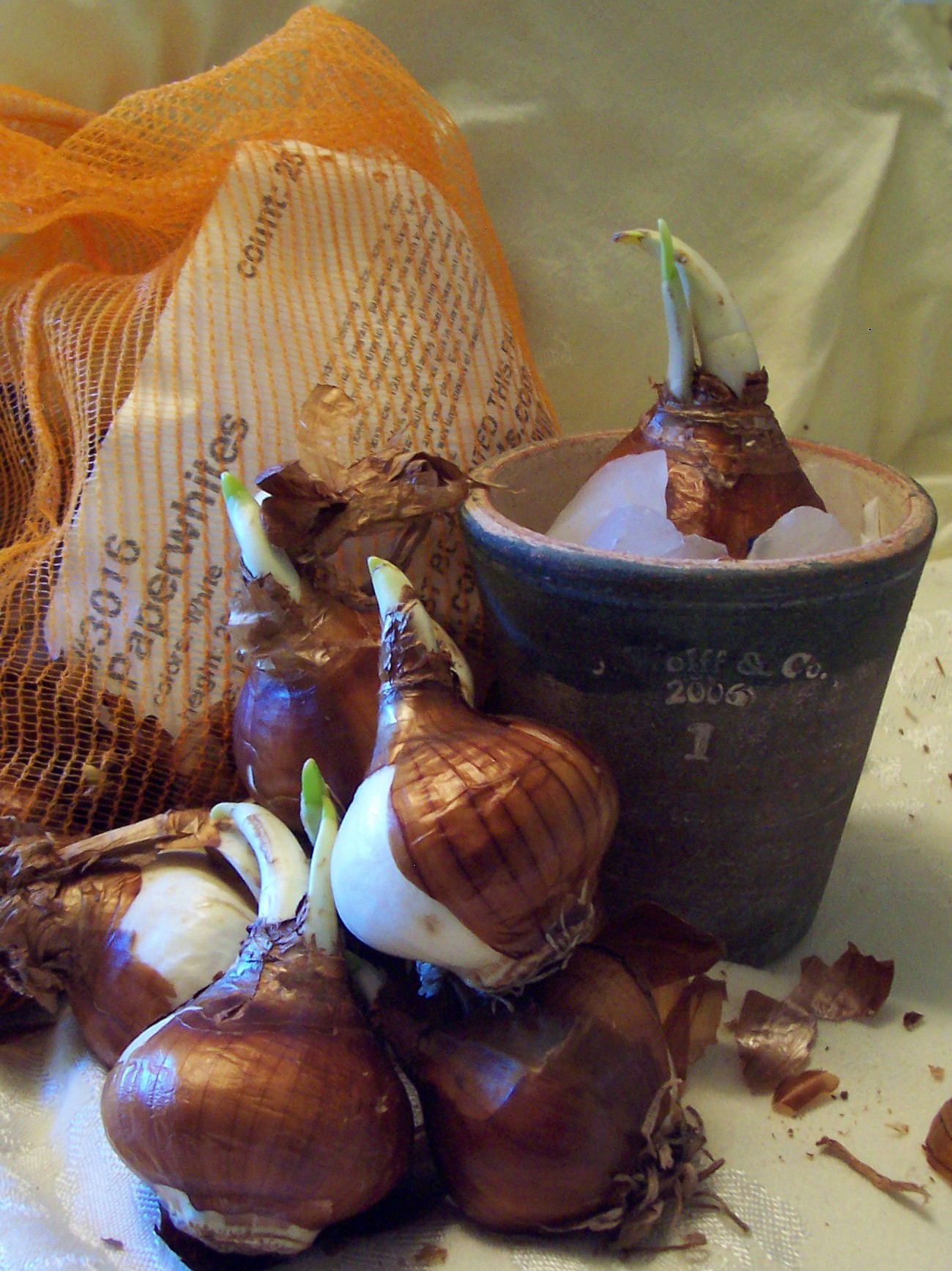
Tis the season to start your paperwhites!  Fragrant and easy to grow, Narcissus tazetta commonly known as “paperwhites” are bulbs that are native to warmer climates and grow easily without a chilling period.  This classic indoor bulb is intensely fragrant with elegant star-shaped clusters of white flowers that are popular at holiday time. Once planted, watered and placed in a warm spot they will bloom within 4 to 6 weeks. I always plant mine the first week in November and then plant another group in a few weeks to stage a longer period of bloom and color all season long.

Paperwhites lend themselves to holiday decorating because they can be planted in unusual containers to fit a theme such as teacups and glass bowls. Cluster potted groupings on a mantle or mixed into centerpieces among greenery, berries and bows for a living and fragrant element to your holiday décor.

How to plant:

Gather supplies-

-4 to 6 inch round, 4 inch deep pot. Use terra-cotta or any decorative bowl; just make sure there is a drainage hole in the bottom.
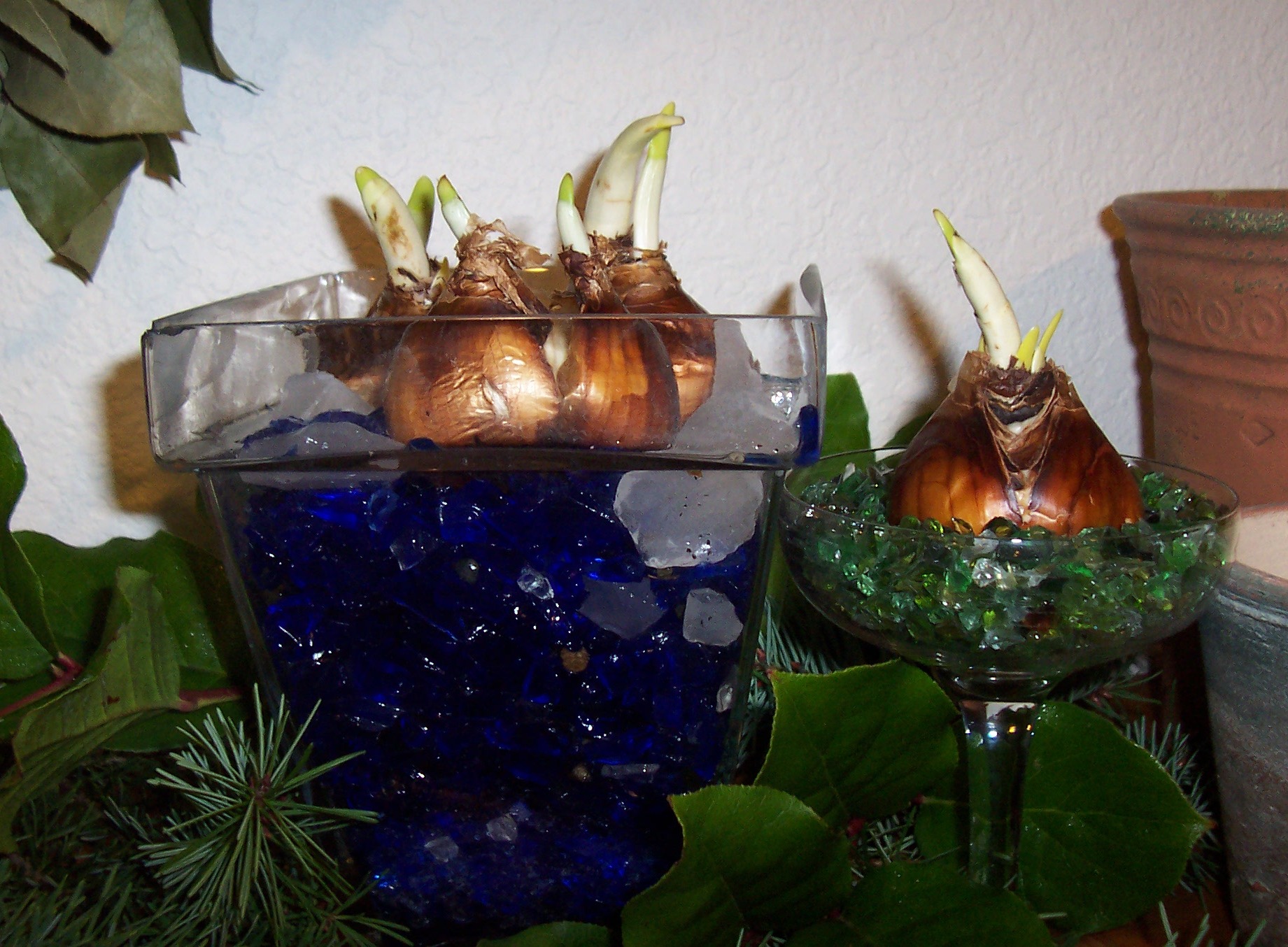
Bulb Beauty- Cobalt beach glass in a clear pot and small chip green glass in a champagne glass.

-3 to 5 Paperwhite bulbs (the most common variety is sold as Paperwhite “Ziva”) Choose bulbs that are firm, with rich brown papery, outside layers. A bit of green stem showing is OK.

-White rock chips or try a touch of creativity by using beach glass, marbles. Use anything heavy enough to keep the bulbs upright.

How to:

In the bottom of the pot, place at least two inches of the base material (rock or glass, etc.). Depending on the size and style of the pot, you may need to go deeper.The bulbs top should set just below the rim of the pot.  Set the bulbs firmly on top of the base; roots down and stem up. A 4 inch pot will hold 3 bulbs and a  6 inch pot holds 5 bulbs. Loosely fill the pot with remaining base material to the rim.  About half of the bulb should be exposed. Water well and place in a warm spot,  away from direct sunlight,  until green shoots emerge to about 4 inches.

Bring the pot into a sunny spot and keep evenly watered. Do not over-water. The blooms will last longer if kept in a cooler area of the home.

Give them a holiday spirit!

Paperwhites tend to get tipsy. The problem is,  the slender stems grow tall with all of the flower weight at the top, making the stems bend and fall over.

Researchers with the Flowerbulb Research Program at Cornell University have remedied a solution to this top-heavy blooms; alcohol. When paperwhite bulbs are grown in a diluted solution of alcohol, the plants reach a height of up to 1/2 their normal growth yet the flower size is not affected and they bloom just as long. The water/alcohol stress on the plants is just enough to stunt their growth, let’s just say it Continue reading “Grow a (Paper) White Christmas”
Future sustainable gardener

Can’t resist another  kid story, somehow being a grandma gives inalienable rights. My granddaughter Alexis was visiting over the weekend and as always,  loves to be outside chasing the dogs, riding her bike and gardening. Since she was tiny,  she puttered around with me, even when she was just an infant, she would sit outside on a blanket while I gardened. I often wonder if that is how she spouts plant names so readily, by hearing me mutter them under my breath as I worked away.  She is an awesome weeder, greenhouse sweeper,tag sorter, container garden waterer and even helped plant my whole veggie garden this year. (Probably another post on our latest harvest of potatoes, stay tuned.)

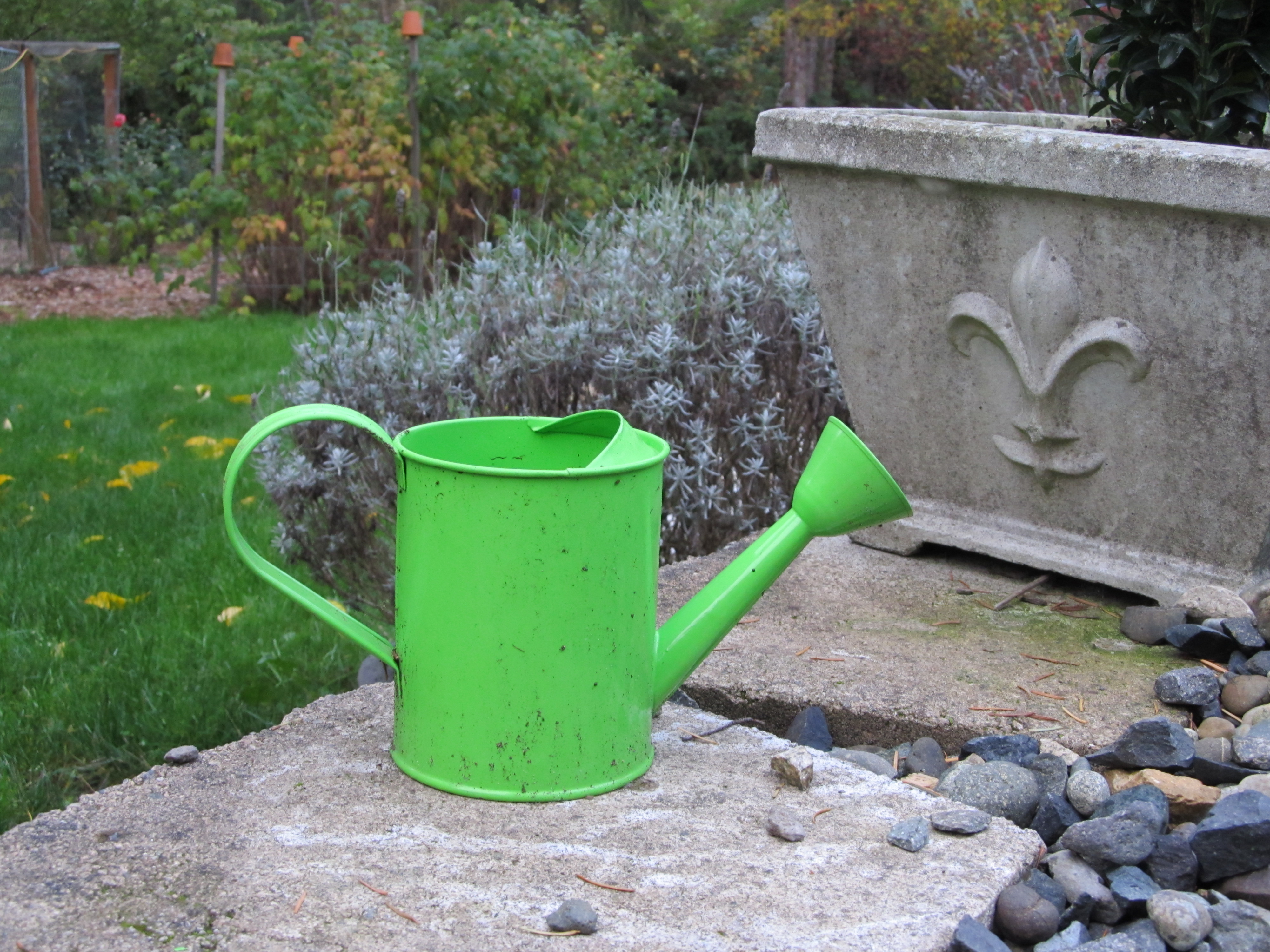
Last Saturday,  we were working outside, I was raking leaves and trying to win a battle against blackberries along the property line.  I hear Alexis, excited and yelling, “Nana, look what the rain left for me.” She had gone down to the potager and found her watering can had filled with rain water. She said, “the rain left me water for your plants”. She proceeded to water my container gardens with her little green watering can. Hours later, as we were cleaning up the tools for the day, her watering can was perched on a stone wall near the garden, I asked her to put it away. She told me no…that she needed to leave it out so the rain could give her more water. I really can’t argue with that logic.

It also gave me a moment to ponder about what I do and the business-side of gardening; sometimes it can feel a bit over-processed and uptight.  Once in a while,  it is nice to think like a 4-year-old… “Look what the rain left for me…”


More…pondering of Squash

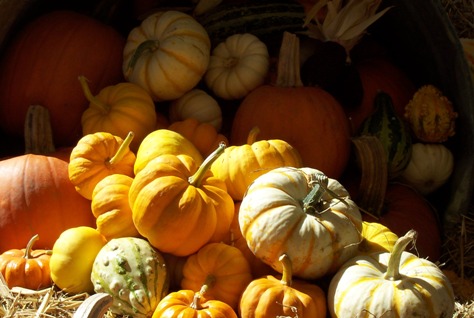
A recent trip to the grocery store brings about the inspiration for this story. As I was in line to pay, the customer in front of me was purchasing acorn squash. This time of year, they are piled high in produce bins alongside the multicolored gourds, ornamental corn, and mini pumpkins. The teenager bagging the groceries held up one of the acorn squash, surveying it, and asked, “What do you do with these?” The purchaser replied she was going to make baked stuffed squash to which the perplexed teen replied I thought these were only for Halloween decorations. Hmmm, so what do we really do with squash and what the heck are gourds anyway?

Cucurbitaceae is a genus of annual plants that crawl around taking up space with their languishing vines and produce fruits at the base of the blossoms. A plant family with a broad range of over 700 species that includes cucumbers, pumpkins, melons, and squash.

Summer Squash

These are the earliest picked of the group and include cucumbers, zucchini, and crookneck. They are harvested when the seeds are immature inside and the flesh is still tender and edible. The vines are more bush-like and do not take up as much space in the garden. These can be harvested anytime they are showing their full color and size.

Gourds

These are hard-shelled with little flesh inside, they dry and preserve well. In history, they have been used as musical instruments, spoons, bowls, and as a sponge (the luffa gourd). Ornamental gourds are grown most often for decoration and have many types of usual colors, shapes, and warty texture making them prized for fall decorations. Gourds are ready to harvest from the garden when the stems dry out and turn brown. Leave a few inches of stem attached to prevent rotting.

Pumpkins

They get a class all their own by the very nature of their popularity. As noted by my previous post, they also get a post all their own! This bright orange harbinger of autumn are typically thought of for decorating but the smaller sugar pumpkins are flavorful when the pulp is baked to the consistency of pudding and used in soups, cakes, breads and pies. Harvest pumpkins when the color is deep and rich and the outside is hard. Leave 3 to 4 inches of stem attached to prevent premature rotting at the stem end.

Winter squash

These fruits have harder skins that need a longer growing period. Hubbard, butternut, and acorn are a few familiar ones. Winter squash are warm-season plants. They differ from summer squash because they are harvested in the mature fruit stage; picked when the seeds inside are fully mature and the skin has hardened into a tough rind. Most varieties can be stored for use throughout the winter. Typically, they are cut open and baked to soften the insides with spices or meats to season them. Most have a nutty flavor and tend to pick up other flavors easily.

So really, what do you do with acorn squash?

Baked Acorn Squash

This is a recipe from childhood. I remember the warmth of the kitchen and the aroma of maple syrup as my mom would bake up acorn squash as a side dish for dinner.

One acorn squash, cut in 1/2

 2 tablespoons butter, softened

 2 tablespoons brown sugar

 2 tablespoons maple syrup

Salt and freshly ground black pepper

Preheat oven to 400 degrees F.

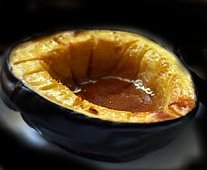
Scoop the seeds and stringy pulp out of the squash halves and discard. Lightly score the inside halves with a knife. Combine the brown sugar, butter, syrup in a small mixing bowl. Add salt and pepper, to taste. Rub and coat the cleaned inside cavities of the squash with the butter mixture. Place them on a baking sheet, cut side up. Bake for about 1 hour or until the squash is tender when pierced with a fork.


Pumpkins from garden to table

pile-o-pumpkins

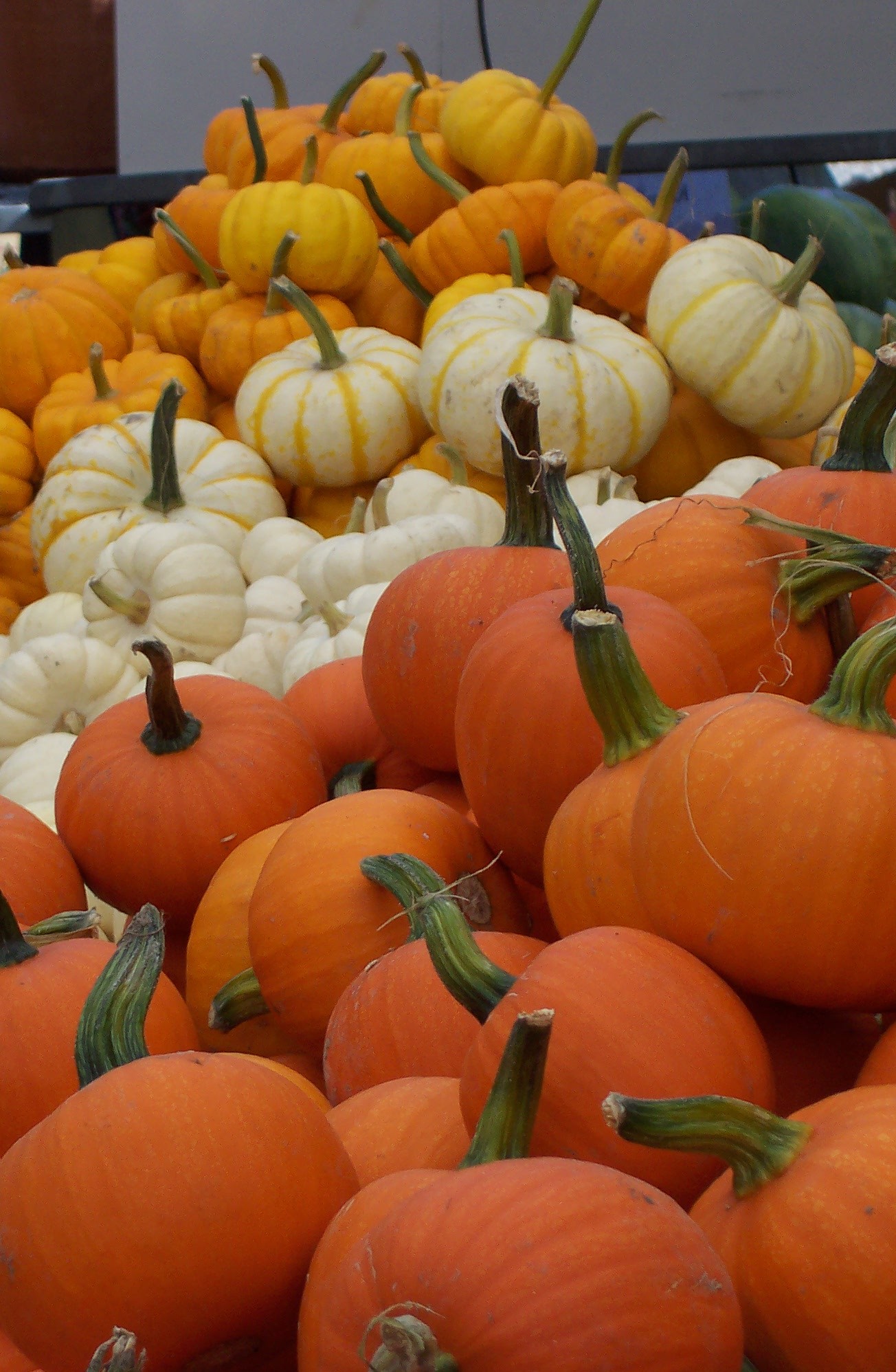
I love this time of year and all the piles  of pumpkins in stores and the u-pick farms.

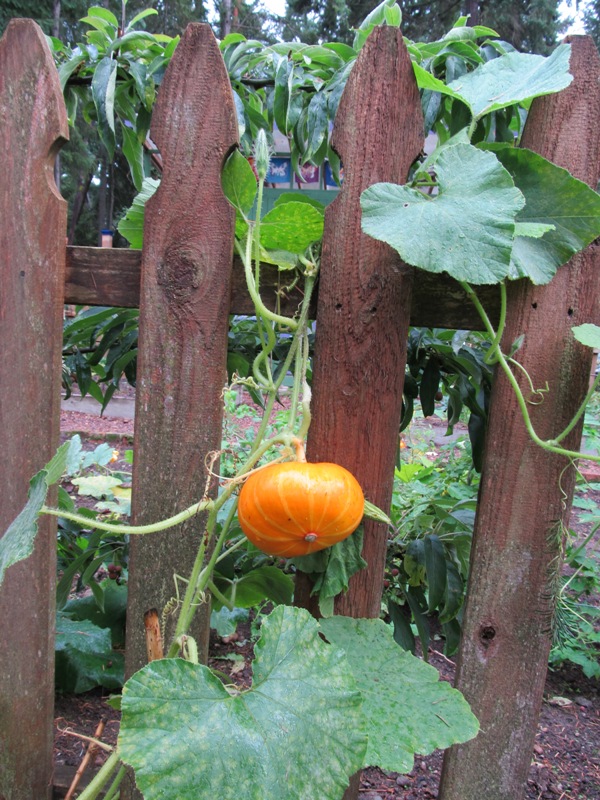
It’s time for fall harvests and pumpkins are everywhere.  In the garden, nothing delights kids more than to see bright orange fruits peeking out from under a vine.  Growing pumpkins is not for every garden. The sprawling vines take over, under and all around a garden space. In my small Potager, (kitchen garden) in the midst of everything else I want to grow, I always make room for a pumpkin plant or two. This year, I had one vine dangle over the top of the fence with a small pumpkin hanging on for dear life!

grow where I may


Even though it is out of season to talk about growing them, here are some tips to consider when planning your next growing season.  To help reign in the long pumpkin vines here are a few tricks I use to conserve space. As soon as I see a softball sized fruits forming, I cut off any new growth beyond that fruit. This allows it to grow bigger and ripen, rather than have the plant continue to put energy into forming more. I also gently move the vines as they are growing and start to form a large spiral (without breaking them) rather than allow the vines to take off in all directions. Turn growing pumpkins occasionally to avoid them being lopsided. Leave them on the vine as long as possible if they are still green to promote ripening. Harvest pumpkins when the vine begins to die out and the pumpkin is showing its full, rich color.

Pumpkin varieties vary from good carving to the sweet varieties for eating. Carving pumpkins are typically grown for size and not for baking. Carvers to grow include “Howden”, “Racer” and “Connecticut Field”. For baking choose, the Cinderella pumpkin “Rouge VIF D’Etampes”, “Small Sugar” and “SnackJack”. Unique novelties to grow are “Lumina” (white skinned, yellow flesh), “Baby Boo”, “Jack-B-Little” and “Jarrahdale”

Harvest and enjoy!

Recipes to try:

Pumpkin Mush

Pick the sweet varieties for baking. The pulp can be used in pies, soups, cakes and cookies.

Cut the pumpkin in half. Remove the seeds and fibers. Place the cut halves on a cookie sheet. Bake in a 350° oven for 20 to 60 minutes (depending on the size). The pumpkin is done when the skin is brown and you can easily push a fork through it. Allow to cool and scoop the flesh out of the skin. Puree or mash it. It should have a consistency of pudding. To preserve, pack into freezer bags in 2 cup quantities. Two cups of mash will equal about a 16 ounce can. Use in pies, soups, and cookies.

Pumpkin Soup

This brings back memories when I was little girl in Winston-Salem, North Carolina. We once had a Thanksgiving dinner at the Old Salem Inn. As a kid the thought of pumpkin soup sounded weird, but the taste was good!

2 tablespoons butter

2 cups cooked, mashed pumpkin

3 cups half and half milk

2 teaspoons chicken bouillon granules

½ teaspoon pepper

1/8th teaspoon powdered allspice

1/8th teaspoon ginger

Salt to taste

In a saucepan, melt the butter, and then add the pumpkin. Stir well and add remaining ingredients. Bring mixture to a boil, stirring constantly. Lower heat and allow to simmer for 10 minutes. Serve in bowls or mugs. If desired,  top with a sprinkle of sunflower seeds, croutons, a dollop of sour cream,  fresh parsley or small snips of chives.

Teeny, sweet bouquets!

 There are captured flowers in vases as the lavender dries upright beside the Moonshine yarrow and the hop vines. Memories of the summer garden on the buffet in the dining room.

But there is more  about this that makes me smile.  Tucked in front of the large vases of dried flowers are teeny, tiny glass bottles with sweet bouquets of  fresh flowers in them. A gift from my granddaughter last week. One of her favorite things to do is to pick flowers from the garden and leave them for me. She likes to help arrange fresh flowers in the big vases , but it isn’t always easy for her to do her own thing. As is typical for a 4-year-old, she wants to do them herself.

One day, I decided to let her use some small glass bottles as flower vases. I have a collection of old bottles that in the past, just sat on the shelf collecting dust , now they are perfect for my budding garden helper. Every time she visits I get fresh, teeny bouquets in my dining room.

Tread upon my Chamomile


Though the chamomile, the more it is trodden upon, the faster it grows; yet youth, the more it is wasted, the sooner it wears.’ Shakespeare, King Henry IV part 1

The romance of a large chamomile lawn releasing its fresh, green apple fragrance as it is walked on, is  part of my fantasy herb garden…then I think about all the upkeep keeping the weeds out of it and the wreck it would become as my dogs rip through it,  there it stays in the fantasy garden.    (Don’t we all have our garden bucket list?)

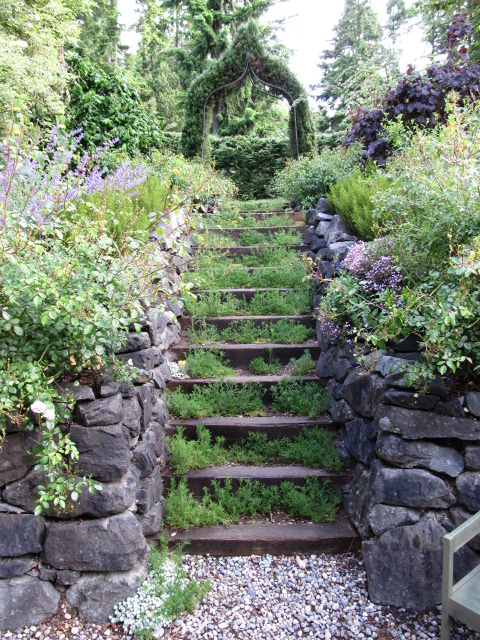
In reality, I planted chamomile in the stairs that lead to my upper garden. It has become more than just fragrant steps, it is gardening therapy. A few times a month in its growing season, I get out my sheep shears and have a bit of aromatherapy as I tidy up the steps. The fragrance is heavy in the air as it is snipped back down to a few inches. This is a garden chore where gloves simply won’t do, I love the scent and oily feel of the essential oil as it lingers on my hands.  It is said that chamomile grows faster the more it is stepped on, it also looks nicer when regularly trimmed like lawn grass. I do like the steps a bit shaggy  but the plants  really fill in much thicker when I keep it clipped.

More about this multipurpose herb

Botanical Name:

Chamaemelum nobile

Common Name: chamomile, ground apple

Culture: Zone 4.  Herbaceous perennial.  Full sun to part shade. Grows up to 12 inches tall and spreads by creeping rhizomes.  Best in well draining soil.

The plants will fill in better with regular watering and shearing.

Ornamental Value:

Chamomile has fern-like leaf shapes and small white daisy flowers. The most prized use in the landscape is as a substitute for lawn grasses. It spreads easily and fills in tightly when trimmed or lightly mowed on a regular basis. C. nobile ‘Treneague’ is a non-flowering variety best for use as green pathways and lawns.  The ornamental value of chamomile has been treasured for centuries as a verdant living carpet or garden bench that releases a tart green apple aroma when crushed.   Plant the double showy flowers of C. nobile ‘Flore Pleno’ as a groundcover under rose bushes. Chamomile is said to have a symbiotic relationship to promote healthy roses. Strong infusions of chamomile flowers and leaves used as compost tea are said to activate compost piles.

Traditional or historical herb use:

The botanical name is derived from Greek meaning “apples on the ground” describing its fragrance when walked upon. The precious oil extracted from the flowers is a bluish color, once distilled it contains azulene, an aromatic fatty substance that promotes rapid healing of skin. Its reputation has become very popular in modern-day for anti-aging and wrinkle treatments. Tea taken before bedtime will promote sleep and dispel nightmares.

(excerpt from- Herbs By Design, a guide to landscaping with herbs- coming soon)

In Love with Lavender

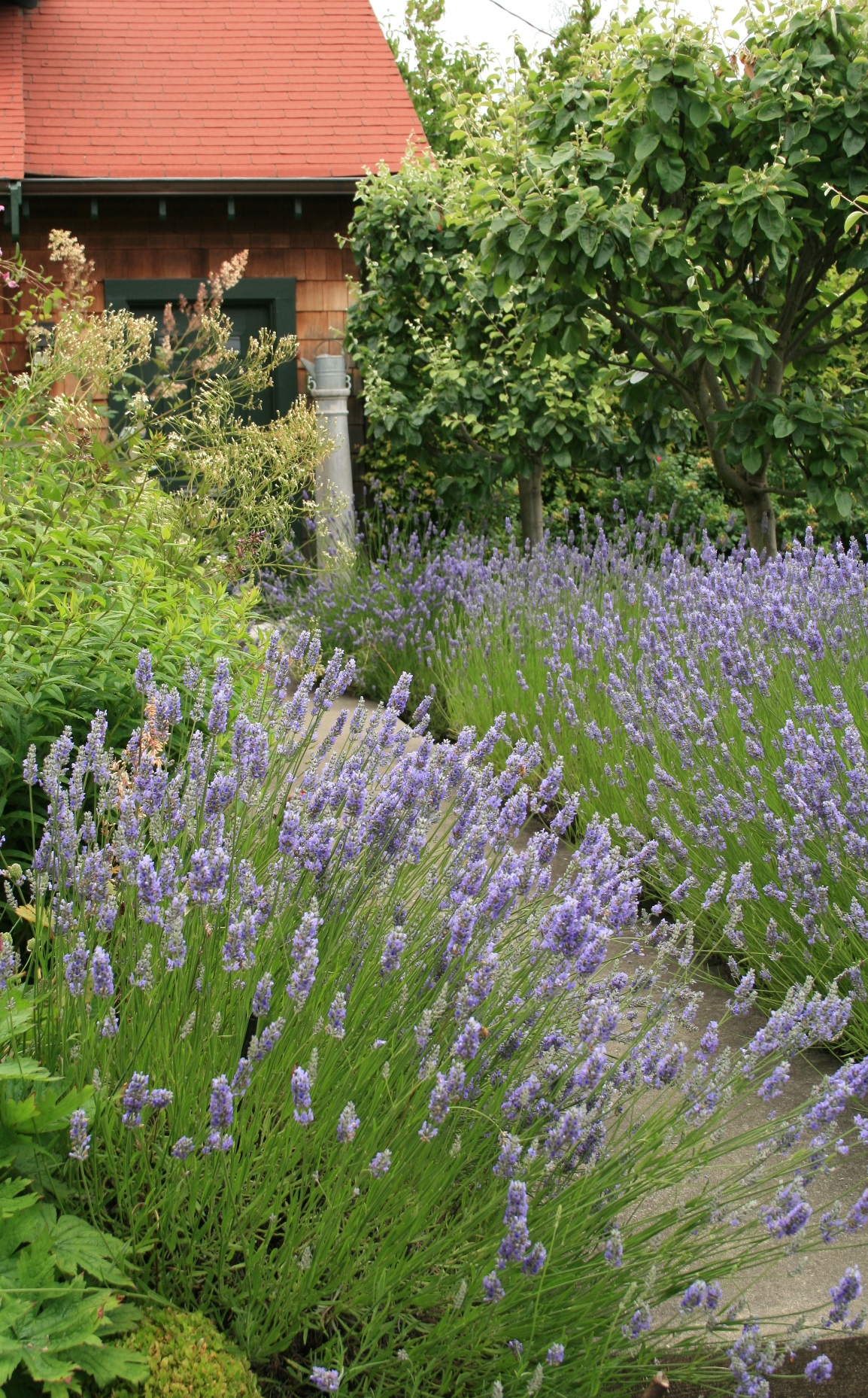
a drift of color greets guests to the front door as it spills along a walkway.

Every season about this time, I feature an article in my newspaper column on growing lavender. The subject and fascination with this plant makes it one of my most requested herb talks. There is a romantic allure to the purple haze of blossoms in the garden this time of year. The festivals begin in mid-July and fragrance fills the air on a hot summer day as the essential oils are released.  The charm is not only about growing it in the garden.  The legend, lore and history of lavender can be just as enchanting as growing it.

I once heard it termed as the Swiss army knife of herbs and that is an apt description. It does just about everything a herb should do. The use of lavender buds and essential oil  dates back thousands of years.  It has recorded uses for over 2500 years, from medicine to cooking; it has stood the test of time. Many herbs go in and out of favor as their attributes are found to either not work or to be too powerful to be safe.  Lavender has never gone out of favor and is as popular as ever.  The essential oils are in all parts of lavender from roots to leaves, but the flowers are the only part that oil is distilled from. The aromatic oil of lavender has powerful natural ingredients that are prized in perfume but also for medicinal qualities.  The principal components of the oils depend on where it is grown but include properties that are antibiotic, antiseptic, skin renewing and healing, calmative, pain relief, insect repellant and nerve tonic. Culpepper’s historical herbal gives testament to many “interesting” healing properties including sluggish maladies, strengthening of the stomach, a gargle against toothache and to reduce the trembling and passions of the heart.

The name lavender is derived from the Latin lavare which means “to wash”.  It was used extensively in history by Romans as perfume for the bath. In areas of Europe and the middle east where it was native and plentiful is was used as a strewing herb; harvested stems were strewn across the floors of home and churches to cleanse and repel flies and mosquitoes.

English lavender and its cultivars are the most common grown in our gardens and of note; English lavender did not originate in England but was a plant introduction as it spread its way into France, Italy and Spain.  The first notation of lavender cultivated in England was in 1568, and has since become synonymous with English gardens. An air of Victorian melodrama comes with lavender lore as it was used as an aromatic spirit to prevent fainting spells and swooning.

Capture the use of lavender and its legendary attributes:

(Use caution on sensitive skin and test for allergies first!)

  On your next camping trip take a bottle of lavender essential oil: Dab it on bug bites for itch relief, dab on minor burns for fast healing and soothe a headache with one drop of oil on each temple and gently massage for 15 minutes.

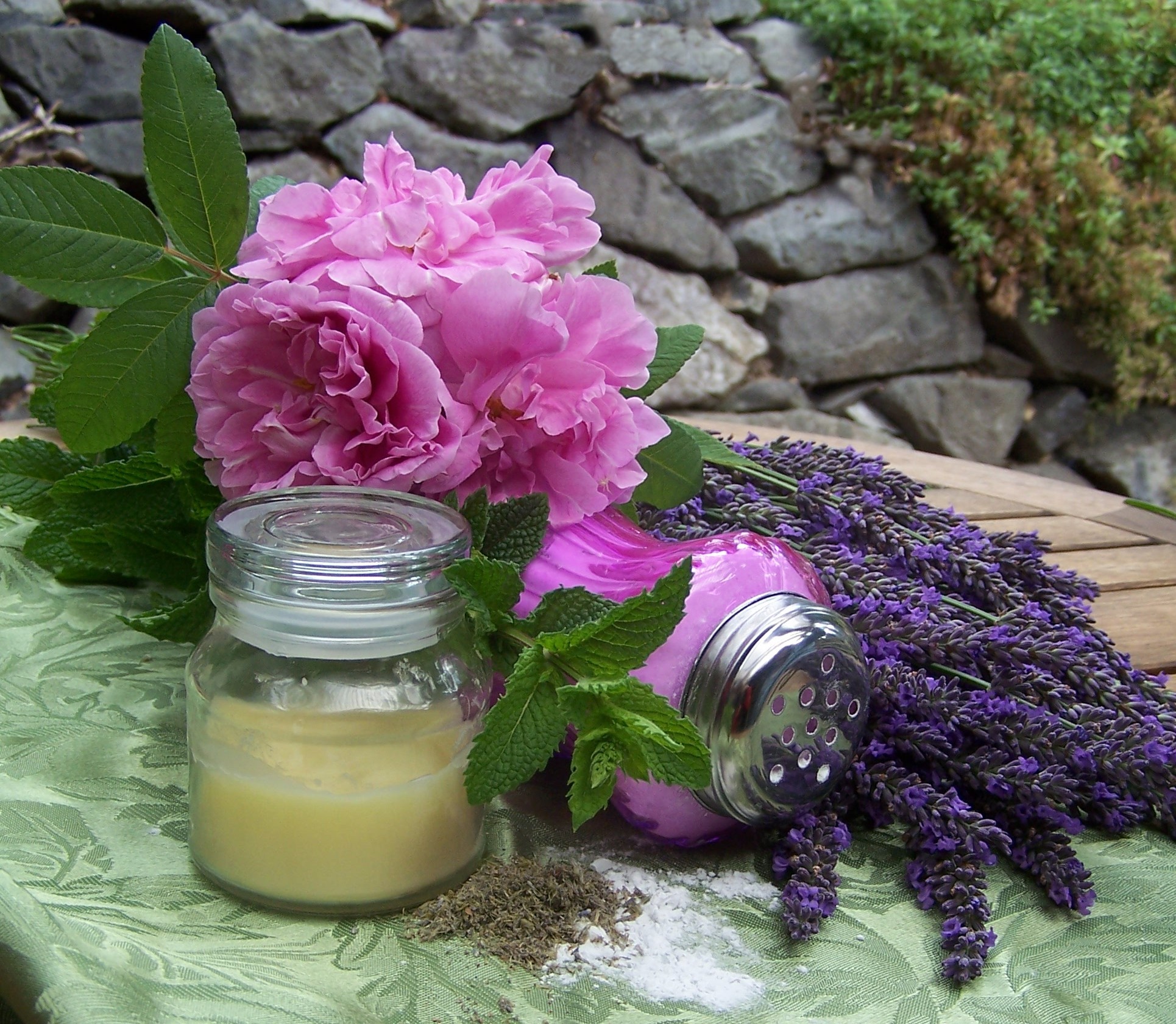
 Mist sunburned skin with a cooling lavender water mist: To make a mist, simmer ½ cup of fresh lavender buds in 4 ounces of purified water for at least 15 minutes. (Do not boil, just simmer). Allow to cool, add 10 drops of lavender essential oil (found in health food stores). Place in a glass bottle with mister spray top. Shake well before use and mist on sunburned or itchy skin.

Fill a fabric sachet with dried lavender buds and place the car as an air freshener. The added aromatherapy properties have a calming effect for tense times in rush hour traffic.


(Recipes from the second in the series of Creative Garden Guides- “In Love with Lavender” by Susan Goetz

Booklets may be purchased by post or online. For more information www.thecreativegardener.com

Herbs on ice

Back again. As spring came in…like a lion, the blog sat with no new words but many ideas rolling around on my to-do list.

Lets get going again. It is mid-summer and the garden is over abundant with color and fragrance and I wouldn’t want it any other way.

One of my favorite things is when the herbs start begging for attention. Pick me! Pick me!  A perfect way to capture the flavor of fresh herbs is to freeze them into ice cubes. Simple, easy and perfect for dropping into sauces, soups and drinks. The herbal flavor melts  into your recipe. Oregano, basil, chives, mints, thyme all your favorite herbs can be frozen at their freshest.

On a recent visit to the local Ace hardware, I found these sweet little ice-cube trays shaped liked leaves and hold the perfect measure of herbs.

How about a teaspoon of spearmint to chill out a Mojito or

a lavender kick to a glass of lemonade.

Lavender and Mint Cubes

Cut fresh spearmint, place one leaf in an ice cube space.  Cut fresh lavender ‘Hidcote’ and gently strip the buds off of the stems. Add them on top of the mint leaf. Fill with water. Freeze. After frozen, pop out and place into freezer storage bag for next use.

Try this too! Rub on overheated skin or burns to cool down as the healing power of herbs works their magic.


Earthwise!

We don’t see salvage…we see possibilities!

Courtney and Hayley with a find, windows for the greenhouse!

 The adventure continues as we are in the final countdown before building the garden at the Northwest Flower and Garden show.

Earthwise in Seattle!  Gotta love this place.  

Re-characterization is around every corner. Windows, old metal signs, heater vents, radiators, architectural columns, we could go crazy picking out things, but there is a line between cluttering up a garden and creating artistry from found objects.We even found the old door keys we needed, come to the  show to see how those are going to be used…crazy cool!

Choose Joy!

Choose Joy!

For those of you who know Courtney, you also know what she has been through for the past two years. In April 2009, this vibrant, normal healthy teenager doubled over in pain. A pain radiating from her stomach that she would describe as swallowing nails or someone cutting her open. We could only control it with IV pain medication in the hospital for a week.  So the mystery began and continues today. Courtney lives in pain every day; it surrounds her and has become her. Our battle is not to let it define her. Three hospital stays, multiple trips to the ER and every test to poke, prod, scan, scope, inject , swallow, radiate; she’s been there and still no answer. She has become a child who never could swallow pills to young woman who manages multiple medications to help control her chronic pain (and ones control the side effects of the meds that control the pain).  Our new family motto? “Redefining Normal” Because normal is not what it was two years ago, nor is it for a teenager.

Here comes the flower show.

Before she became sick, we had talked about the show. It was in her head to do it as her senior project and it caught hold of her and simply would not let go. We spent long hours of serious contemplation about whether she should. The pain can be debilitating and exhausting and when it is out of control it means the hospital, it is unpredictable at best. Knowing this, one thing always comes into focus, when she works on the show and gets in the pure creativity of it; the pain becomes a background to her. I have marched her though rows of greenhouses of plants wondering if she will get too exhausted, but somehow she finds joy instead.  Her eyes light up over the possibilities we find at our favorite re-purposing store Earthwise in Seattle. She is transformed and the pain does not define her in these moments. There are a few who have disagreed with her decision to continue with the project, but by far almost everyone has supported her.  Her sisters and I have her back,  in case a pain episode slows her down. This is a glimpse of her life story and she hates that I tell it, but for those who know what she is going through, the support of prayers, love and encouragement are all her to ways to find joy. I like to call it “choosing joy”.

One of the challenges of designing a garden in February is finding plants that have maturity.  The goal is to have plants showing what they look like in a full, lush garden. There are the tricks of the trade we have to do to make the garden look mature, but it starts with getting plants up to size and in “show worthy” condition. 

As we were searching for plants last fall, I told Courtney that I found some Grevilleas at the NHS plant sale and I think she should look at them. We drove to a greenhouse to check them out. They were over-flowing 5-gallon pots and loaded with buds.  She closely inspected the plants. When her pain is acting up, she typically is lack-luster in response, so I wondered if she was tired and in pain or simply did not think they’d work out for the garden. Know how I figured out she was happy with the plants?

Did you see the size of those Grevilleas?

She was puttering around the greenhouse further and she came across a plug tray of teeny, tiny “hens and chicks” sempervirens. She carefully plucked two of them out of the tray, turned to me holding them up to her eyes exclaiming, “Did you see the size of those Grevilleas?” Between giggles, I managed to get out my cell phone and take a picture. So glad her illness has not stolen her humor…

choose joy!