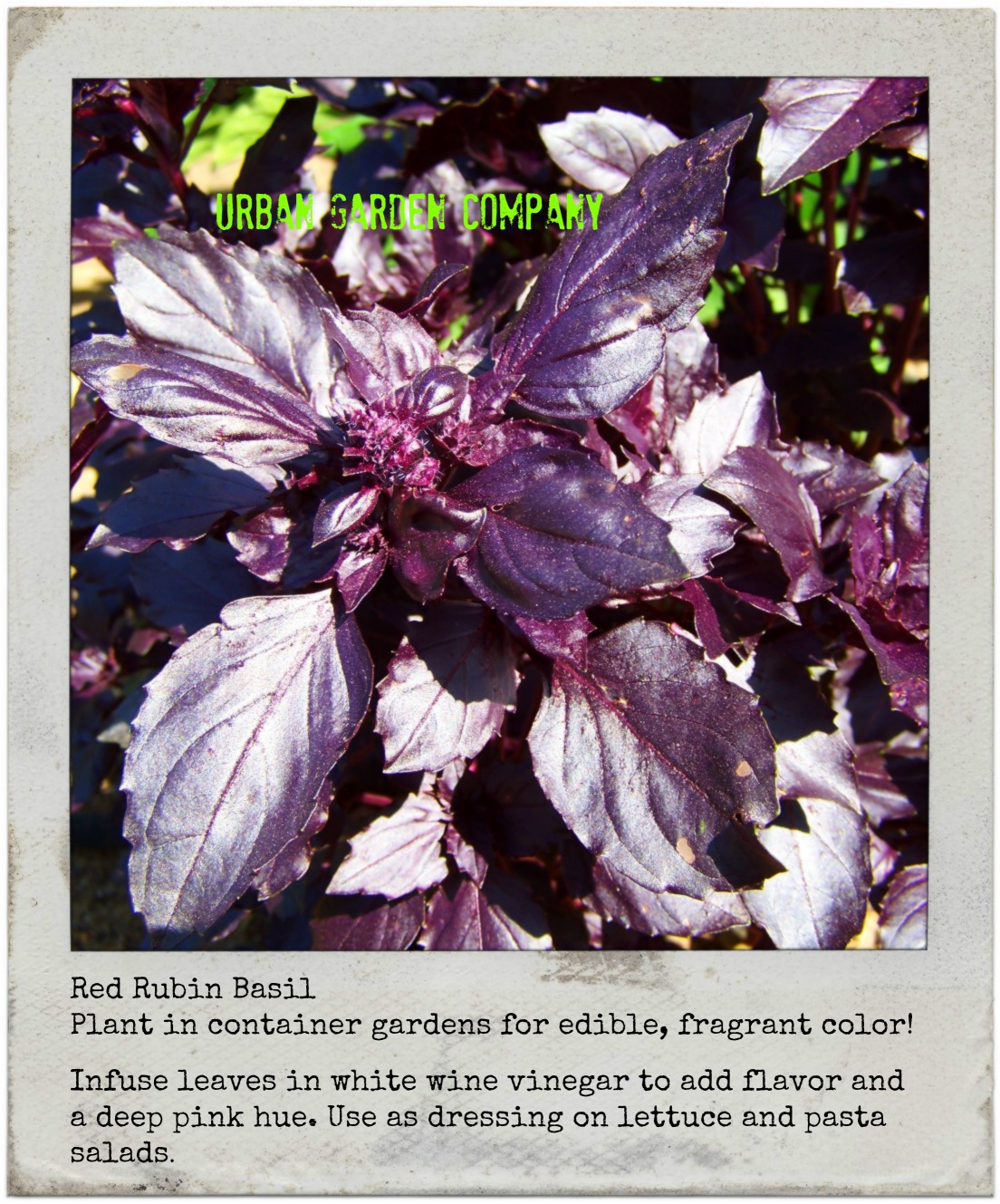
Basil-an edible ornamental

Now scheduling Fall and Winter Workshops at UGC University
for groups of 12 or less (minimum of 5)
Get together at the University of UGC (Urban Garden Company) – Let’s schedule it! Call for available dates and times.
Designing with Bulbs
Get your hands dirty and learn about using bulbs to create a colorful garden. Tips and techniques for planning and planting in the landscape and containers, then create your own bulb container to take home. Instructor Sue Goetz will take you through the process of creating a bulb lasagna container. All of the supplies needed for the container will be provided, however you may want to bring your own pair of gardening gloves.
Per Person $25, all supplies included.
Terrarium Workshop
MaKe-It, TaKe It- fun workshop with all supplies included, we’ll get a little dirty and create small glass gardens perfect for indoor tabletop décor.
Per person: $30, includes all supplies.
Collage Seed Boxes
Fun project! This is a box that will hold seed packets or can be used as a lovely garden themed storage box. We will decorate a plain box with pressed botanicals, paper ephemera, vintage book pages and more. This is a hand-on class with all supplies included. You can bring paper scraps and pressed flowers (and many will be supplied) to personalize your work of art. Learning the mixed collage technique will give you many great ideas for Holiday gifting!
Per Person: $35 includes blank box to collage and all supplies.
Garden Décor for the Holidays, from fragrance to living plants.
Cinnamon, pine, cloves….the fragrances of the holidays captured into crafting and decorating inside the home for the holiday season. Creative ideas woven with the legends and traditions of use. Fresh greens, herbs, dried spices and fruits, potpourri blends, pomanders, bulb forcing, and wreaths for housewarming decor or gifts. Plus tabletop living topiary workshop for an elegant easy way to bring the garden indoors! Instructions how to spiral a mini evergreen and make-it-take-it living ivy wreath.
Per person: $30. Includes all supplies, class fees and instruction to make a tabletop topiary ivy wreath, plus fragrant samples and recipes to take home.
Other topics and sessions available, please inquire!
311 Puyallup Avenue, Tacoma, Washington 253-265-2209, info@thecreativegardener.com
 Garden folklore says that if spiders weave abundant webs it is the precursor to a rough winter. I am not sure about the webs the spiders have created in your garden, but mine are mesmerizing. The spiders have been very noticeable and obviously up to something. Call it folklore; but there is a scientific term “Phenology” which is the study of the relationship between climate and periodic biological phenomena like spiders weaving their webs shorter during an approaching storm or thicker in preparation for a rough winter. The flowering period of plants, bird migration, insect hatching, behaviors, and hibernation are all phenological events.
Gardeners and farmers have used phenology since they began to cultivate earth. They simply used intuition and observation to learn the connection to nature for successful growing and harvesting. The reasoning is valid, because you cannot always rely on the calendar. A cold wet spring may delay planting and blooming, a warm winter period fools bulbs into emerging. Watching natural behavior instead of the calendar for garden activities and weather forecasting brings out the phenologist in all of us.
As fall has ushered in the colors of the leaves deepen and the days grow shorter, a common question is with such a crazy hot/cold
summer, what will winter bring. Does nature really know the secret?
Interesting lore and facts on how nature signals the seasons:
-If the foliage on the trees is thick and hangs on late in the fall, it is going to be a hard winter. The reasoning is- the heavier foliage creates thicker ground cover, which in turn protects larva and other organisms below the soil.
-If fur on animals (such as squirrels, rabbits, deer, fox, and bear — or even domestic fur-bearing animals, if they stay outside all the time) is thick, it is going to be a hard winter.
-It is said that horses spook more easily around Halloween. It is not eerie, but more a sign of fall in full swing. Daylight hours lessen and shadows shift and move differently as the sun lowers in the sky. They cast longer shadows across pathways and wind rattles dried fallen leaves making a shift in natural sounds; causing a reason to spook or feel unsettled.
-Clear moon, means frost soon. When the night sky is clear the earth’s surface cools rapidly because there is no cloud cover to hold the heat. If the night is clear enough to see the moon, then the temperatures will drop.
-Wasps building nests in exposed places indicate a dry season, when they build nests near the ground a harsh winter is expected.
The interesting part of the spider theory in this year’s garden; forecasters are telling we will have a snowy, wet winter with temperatures below normal. Hmmm…spiders or forecasters… only time will tell.
I have been watching the buzz on this book for a while and waiting for it to emerge into pages. I will honestly say that I thought it sounded fun, but was not really sure if it was a book I would go out and buy.
The title evokes images of an old movie set. The dark stone walls of a castle dungeon and distillery equipment steaming with fragrant concoctions…but I digress.
I am a fan of the author, Amy Stewart and have all of her previous books, so it might have been just a purchase as a fan and not necessarily of the subject matter.
 But of course, Amy you had me at the aperitif, as most good beginnings should.
This is not a tale of a curmudgeonly old botanist,who is more interested in pistils and stamens while imbibing too much.
The Drunken Botanist is much more fun. Who knew that walking into a liquor store would inspire a garden writer. Everything on the shelves is rooted in botanical history, from hops in beer to the nectar of Agave. The book is a historical exploration how plants return to us in another formulation. Herbs, grains, veggies, and exotic plants have for centuries given us medicine, remedies, food and flavorings this book gives you a look at the fermented side of plants.
Even if the study of liqueur isn’t your thing, the botanical journey is definitely worth the read. Cheers!

Amy’s garden, colorful and edible…or should I say drink-able! On right: peppers, celery, basil, strawberries, Calendula, cucumber, lemongrass….photo courtesy of Amy Stewart.
Go Local: If you are in Tacoma-check out our very own craft cocktail lounge. www.1022south.com
Local lecture from Amy: March 27th at Powell’s books in Portland, Oregon and March 28th at Third Place Books in Lake Forest Park. Washington. More events listed at www.amystewart.com.
Free Book : I have a copy of The Drunken Botanist from Amy and am giving it away. NAME THAT PLANT! What Pacific Northwest native fern would you steep in water to create a bitter cocktail syrup that hints at a licorice-flavor mixed with orange water. Post a comment here, on Facebook or stop by Urban Garden Company in downtown Tacoma to drop off your answer. One of the correct answers will be drawn randomly. Hurry and answer by March 31st, the winner will be drawn April 1st.

Forcing spring bulbs is easy; it just takes a little planning to have blooming color through the winter months.
Most spring bulbs need a chilling period to complete the natural cycle that makes them bloom. That cycle is the reason spring bulbs are planted in the fall. The cool wet soil and air temperature is the natural chill needed.
Pretend it’s spring! To coax bulbs into early bloom indoors, mimic that cooling period. Most bulbs need a chill for 10 to 16 weeks (depending on the type of bulb.) Following suggested chilling time, bulbs can be planted in September for January blooms, October for February and so on. The temperature for proper chilling needs to be 35 to 50 degrees. An unheated garage or spare refrigerator works well. When shoots emerge and the proper time has been met, place the potted bulbs in a warm sunny window. The warmth will force them into bloom quickly. Plant up a few pots and varieties and stage them to stagger blooms for a longer season of color. After the flowers have finished, most can be planted outdoors if they are hardy. Cut off the faded flowers stalks and keep the leaves on. Continue watering until the outdoor weather warms, then plant them outside. The forcing of bulbs sometimes simply exhausts the bulbs and they will not re-bloom. Hardier bulbs like tulips and daffodils may recover after a few seasons.
Paperwhites:
A delicate fragrant indoor blossom that is classic for Christmas decorating. Paperwhites do not need a cooling period as most spring bulbs do to bloom indoors.
Supplies needed
4 to 6 inch round, 4 inch deep pot
Use terra-cotta or any decorative pot; just make sure there is a drainage hole in the bottom.
3 to 5 Paperwhite bulbs (a more common variety is sold as Paperwhite “Ziva”)
Choose bulbs that are firm, with rich brown outside layers. A bit of green bud showing is fine.
White small cut rock chips
Or show a little creativity and use beach glass, marbles or anything that will hold the bulbs upright in the pot.
In the bottom of the pot, place two inches of white rock. Set the bulbs firmly on top of the rock, roots down and stems facing up. In a 4 inch pot place 3 bulbs, in a 6 inch pot use 5 bulbs. Loosely fill the pot with remaining white rock, to the rim. About half of the bulb will be exposed. Water well and place in a warm dark area or away from direct sunlight until green shoots emerge 2 to 4 inches. Bring the pot into a sunny spot and keep even watering. Do not over-water.
Paperwhite flowers will bloom in 6 to 8 weeks. Keep blooming plants away from heat sources. The blooms will last longer is kept in a cooler spot of the home.
Hyacinths
Intensely fragrant and colorful, hyacinth force will in water
Supplies needed
Forcing vase
A glass vase with a smaller neck that allows the bulb to sit in just at the water line.
Pre-Chilled Hyacinth Bulb
Fill the glass vase up to the neck with clean water. Place bulb in the vase. The base of the bulb should barely touch the water level. Place the vase in a cool dark place until roots begin to grow. Check water level and maintain the correct level so roots can grow into it. When the roots are full and the stalk is a couple of inches high, move the vase to a sunnier spot. Pre-chilled hyacinth blooms typically bloom in 6 to 8 weeks. As with all indoor blooming bulbs keep away from direct heat sources and in cooler temperatures to insure long bloom time.
Amaryllis:
Large bulbs and large showy blooms perfect for Christmas decor.
Supplies needed:
6 inch pot at least 6 inches deep
Amaryllis Bulb
Pebbles, pea gravel or small rock chips.
Soil
Start the bulbs in a pot that is only slightly larger than the bulb. They do better in tight quarters and need a good stable base. Place pebbles in the bottom 1 inch of the pot. Place approximately 2 inches of soil in the pot. Firmly place the bulb on top of the soil. Add more soil or take away soil under the bulb so that about 1/3 rd of the bulb is showing. Water thoroughly and place in a warm spot. Keep the soil barely moist until growth begins then water regularly. Amaryllis usually bloom 4 weeks after planting depending on the variety.
Daylight hours begin to slip away hardly noticed,
The days are warm and sunny while nights have a season changing chill,
There is a feel to the air as the breeze blows through an open window,
The signs are here that we are falling into another season.
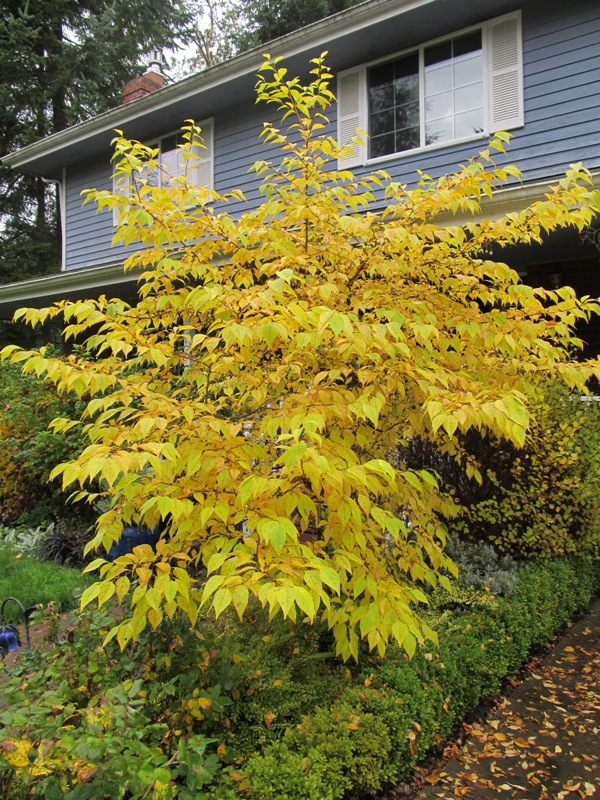
Autumn has two faces.
One side shows a fire of colors that weave through the hillside and the garden naturally senses that it is time to slow down. Gardeners are ready for the slower pace too.
The other side of fall is looking forward to the renewal of next spring. Bulbs are planted and compost is topped in empty planting spaces to nourish growth for the return of longer days. Fresh toppings of compost cover soil that worked hard over the summer.
Inspirations for the fall garden
Cool garden tasks
The time is now to accomplish postponed jobs. Dig out under achievers in the garden and be a bit ruthless if needed. Replace them with those impulse plants purchases sitting by the potting bench awaiting a home.
Get limey to be less sour
In history, it is said that farmers literally tasted the soil. They described soil as “sour” when the pH is too low, “bitter” when the pH is too high and “sweet” when the pH is “just right” for good crop growth. Hmmm, I’ll take a soil test instead. Fall is a good time to add lime to lawn areas. Lime will improve the availability of essential plant nutrients as the PH is adjusted a bit sweeter.
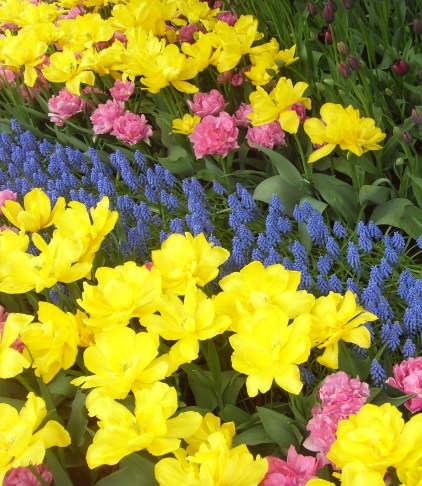
Bulbs, bulbs and more bulbs
Plant spring-flowering bulbs in abundance to make a statement. Daffodils and tulips selectively chosen for dramatic color blends or in monochromatic plantings scream for attention. Never buy just a small bag of bulbs for planting think of it like an abundant flower bouquet. If you aren’t willing to plant 50 to 100 bulbs in a cluster, then don’t bother, unless they are specialty bulbs like lilies.

Love those hips
Roses that produce lovely hips look especially jewel-like in the fall. Rugosa roses like the varieties ‘Hansa’ and ‘Buffalo Gal’ have large round hips.The blue-leaved rose, Rosa glauca (Rosa rubrifolia) is not known for exceptional flowers but the rose hips more than make up for them. The large arching branches (up to 8 feet) on this plant hang lower late in the season from the abundance. The hips cling on through the winter.
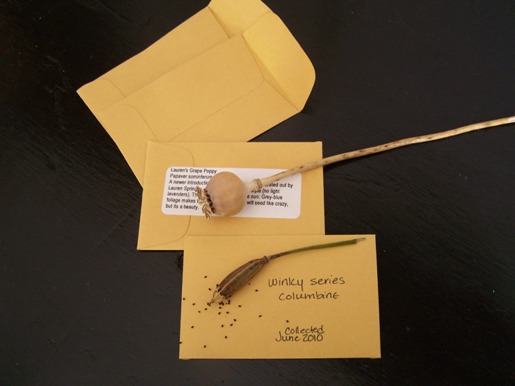
Gather for the future
Collect seeds from annual flowers. Look for the Papery bracts and pods of poppies, cosmos, Bachelor buttons, marigolds and Love in a mist (Nigella).
Enjoy the slower pace of the fall to catch up and breathe in the sweet autumn air..
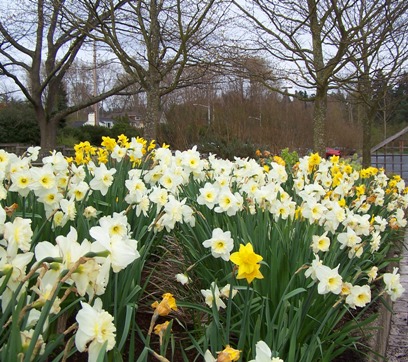 Dear Grandma,
I miss you already and many memories of you make me smile. Some of my favorites are memories of your garden and our garden chats! I remember when I was little; I just couldn’t stay away from your currant bushes that grew along the driveway edges. I‘d get a small Dixie cup from the bathroom and fill it with currants. You then would scold me for eating them and say that you were trying to get enough of those sweet little things to make jelly and I was stealing your stash. The garden in back of your house was huge and it seemed like you and grandpa could grow anything. When it was meal time there was always something picked fresh out of the garden. Once when grandpa wanted a snack he went out to the garden and picked beautiful leaves of romaine lettuce, brought them in the house, gave them a quick rinse, sprinkled them with salt and pepper, and ate them. I was sitting at your table thinking how fascinating it was to see a snack from the garden like that.
Everything germinated by your green thumb. During my last visit, you told me to check on your tiny lemon trees, and wanted to make sure they were ok. You told me you had simply thrown seeds from a lemon in the houseplant soil and sure enough… they grew. Grandma, you could grow anything from seed. I used to think it was magic and it must be why I still have a sense of wonder every time seedlings pop out of the ground.
I love lavender and I am sure it comes from the lingering fragrance of dried lavender flower sachets tucked in your linens. You always said it was one of your favorite flowers, I am thinking it must be genetic! Speaking of genetics, my mom never had a garden when I was growing up and she could care less about growing one, so the passion for gardening skipped a generation and landed in mine. I think you always got a twinkle in your eye knowing that.
You consistently asked about your garden and would say, “I bet my Susie would know what that is.” A few weeks ago during my visit, you asked me to report back to you on how your yard looked. I picked every blooming daffodil in sight to bring to you in the hospital; I thought you needed them more than the garden did. You also insisted that I meet one of the nurses who brought you flowers because that nurse needed to know her granddaughter who loves to garden. It feels like we are in a secret society; those who love the garden no matter what we grow or the geography between. We will always have something in common.
It reminded me of a few summers ago when I told you how beautiful the dahlia fields looked as I passed them driving to your home in Canby. Remember how you told me you missed them? I loaded you up in the car and we went for a drive to see a dahlia farm. The fields of color were so breathtaking but you were frustrated because you didn’t feel well enough to get out of the car for a closer look. We drove all around it so you could feel like you had walked through it. You were worried we would get in trouble for driving on the farm roads and I told her if someone asked, then I’d just tell them my grandma wanted to see the flowers. How could they get mad about that?
Maybe this is another genetic thing, but we always had tea. On our last visit you impatiently mashed the call button for the nurse and when she came in, you told her she needed to bring her granddaughter a hot…very hot, cup of tea… please. I was a bit embarrassed, as I am sure the nurses have much to do, but I did get my tea and we enjoyed a cup of tea together…for one last time.
Thank you for the love of the garden and the keen madness of it all; from the love of brilliant colored flowers to the simplicity of picking and eating snacks right out of the garden. May I do my part and pass that passion on to another generation.
Blessings on your daffodil lined journey to heaven,
Grandma, Lucille Hogan- March 1918 to April 14, 2012.

Nana: “We weeded the garden today”
Alexis: “No Nana, we un-weeded the garden today.”
I stand corrected! That is exactly what we did…pulled weeds. Once again, the joy of gardening through my 5-year-old granddaughters point of view.
Now for some other thoughts on un-weeding your garden! Read “In Defense of Weeds”,
After the click…Compost mulches and more…oh my!
Other weedy stuff:
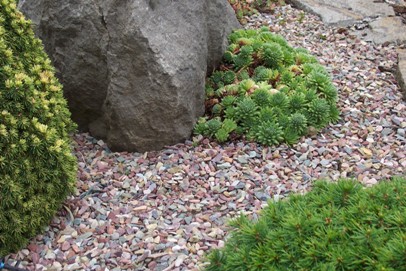

A little moo in your do! www.moo-doo.com/moodoo
Top dress planting beds 3 inches deep with this nourishing compost for happy soil and suppressed weeds. Sounds like good therapy to me!

Nothing fishy about this…just another great compost to try:
Dig into spring!
Falling into ruins:

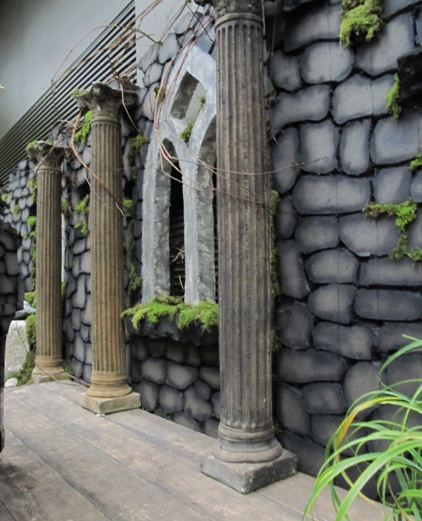
The details that make up a garden are the pieces that set the scene. Plants are a given, they go in a garden, but how you design elements around them helps finish the story.
I have always had a weakness for ruins in the garden. I think hugging ancient stone during a garden visit to Montacute in England did it for me. Oh the stories that stone could tell. Ancient stone has personality; weathered with lichen, moss, and age. Hard for man to mimic what nature does. That story telling aspect is what sets the design notes for building ruins in the garden; you get to create a sense of a story.
 During the process of designing this year’s show garden, many hours were spent on how we would build the backdrop for this garden; a ruins wall that would appear as if an old symphony hall had crumbled down or the music room of an ancient castle had been reclaimed after its partial destruction. We calculated how much stone it would take to stack it and were a bit bemused by the tons of weight we were stressing the convention center floor with. At one point in our designing I negotiated with a local artisan to make the wall. Ben Isitt www.bensartworks.com creates realistic works of art carved from specialized foam. His work is magical and beautiful, but alas he was out of our budget range. What I did learn from Ben was that carved foam could be made to look real and painted to withstand the outdoor elements. Very cool! In the end, a decision was made to create the wall as a temporary structure of foam built by one of our team members. Constructed by Joan Bogan, I wonder if she still is vacuuming bits and pieces of fluttering white foam from the nooks and crannies of her workshop.
In your own garden, we can’t all have a gothic wall but it is more the remnants of things place thoughtfully that create the story.


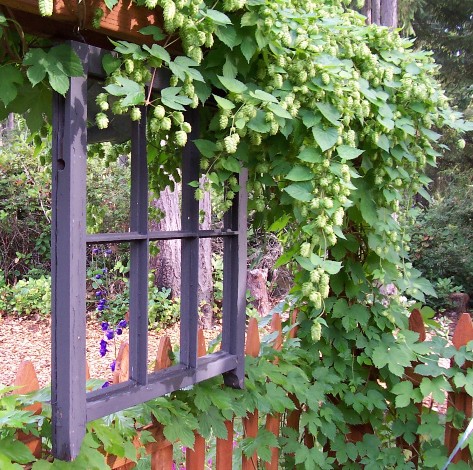

For more inspiration on garden ruins visit Chanticleer in Pennsylvania www.chanticleergarden.org
Companies that create real architectural elements for use in creating garden ruins:
www.redwoodstone.com/index.html
www.haddonstone.com/US/haddonstone.aspx?id=42
…water features are a lifestyle choice.
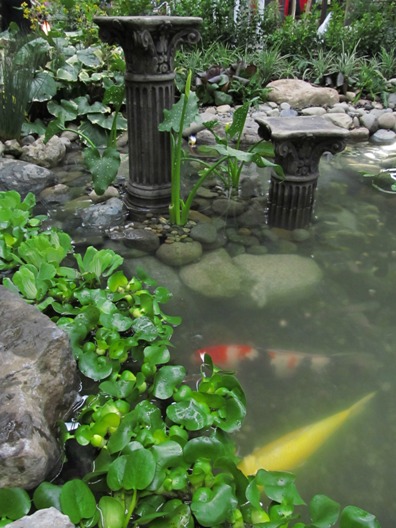
In the design process of the 2012 Northwest Flower and Garden show display garden, one of the concepts that was immediately given to me was a very natural water feature of tumbling rock, after all, I was working with “Mark the Pond Guy.” The rest of the garden was formal and elegant, piano, harp, baroque patterns- so to meld all the ideas together I felt it was vital that the water feature blended back into the “living” spaces, not just set to the side as a visual. There really needed to be a connection between the bold, dramatic tumble of rock and the elegance of the harp, piano and living areas. The water disappears under the decking to invite interaction. You can dip your toes in the water or lie on the deck and drift your hands for koi kisses.

The stone floating water steps gave passage between the two spaces. It was a way to make the rough, natural rock connect to the man-made decking and the formality of the garden style. Mark also wanted koi in the pond, but it needed to be an up close and personal thing. He didn’t want show visitors to see the fish from a distance, but to actual be able to feed them and reach out and touch them, so we placed a large sitting rock right at the edge of the pond. Throughout the show some of the most joyful moments were to watch the kids (adults too!) climb on the rock and watch the fish. In the back of the pond where the drama was, the water needed to emerge from somewhere. This is where a touch of theater came in, the large ruins wall, as if a symphony hall was crumbling down by the rush of water from somewhere beyond.
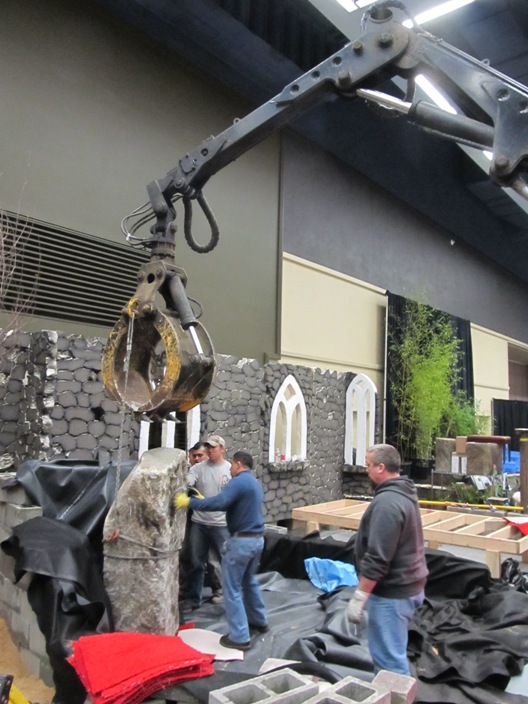
 It just would not have been the same if the water had just emerged from a grove of trees (that would have been too easy…so my gratefulness for not taking the easy way out goes to the hard working team headed by Joan Bogan www.joansnestingplace.com who stressed and worked so hard to get that ruins wall done! ) Thanks also to Mark Harp and his hard working staff that created the water feature. It is not easy to build such a grand feature in three days on the fourth floor of the convention center in downtown Seattle. Watching Mark individually choose and stack tons of rock (yes it was real and individually dry stacked!) was like watching an artist paint a picture. With the heavy-handed help of Marenako’s and their heavy equipment, I just watched in awe.
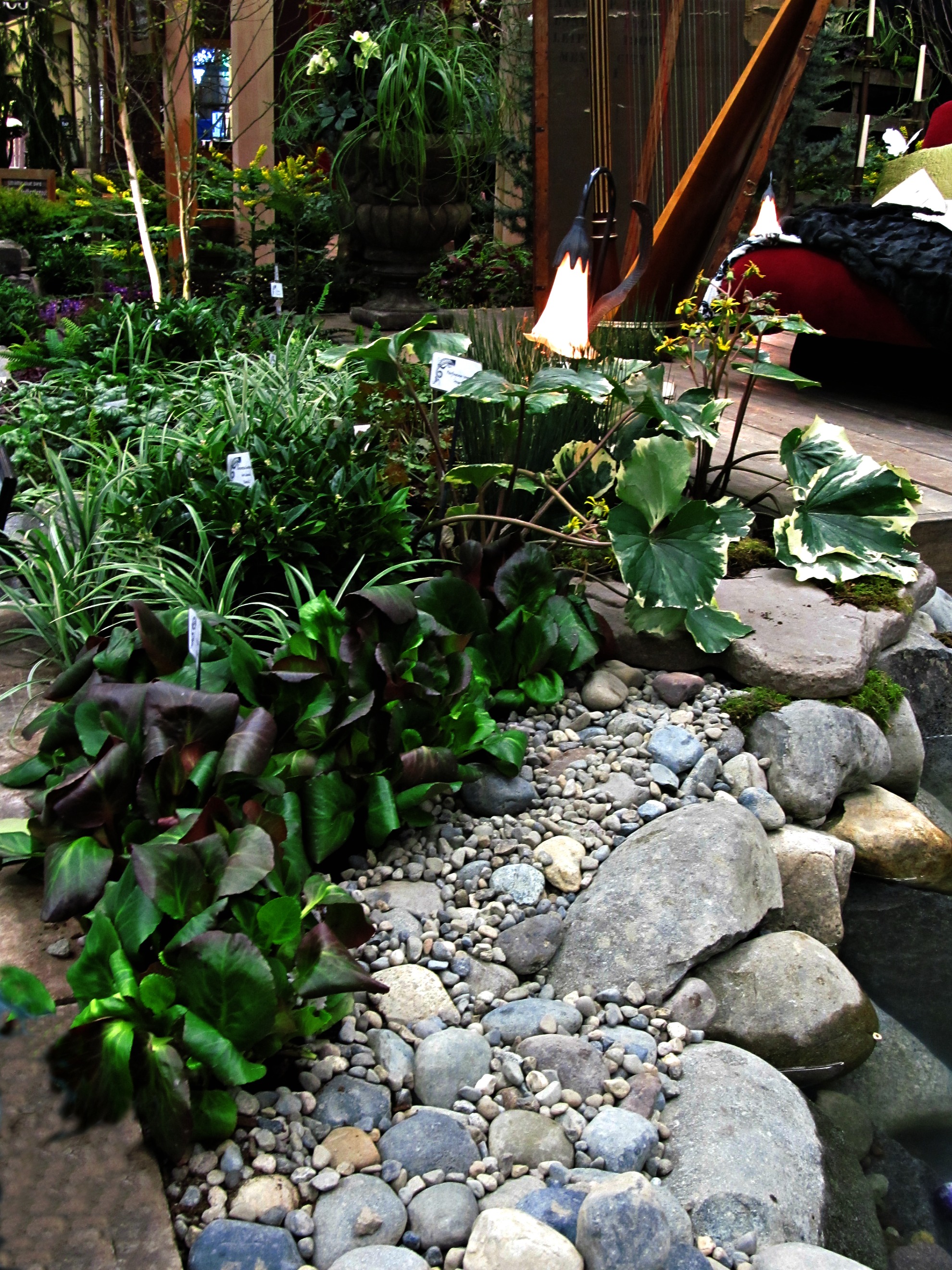
  The pond was beautifully made and finished right up to the last tumble of gravel along the edges.
In garden design, many clients I work with have a wish list for their garden and a most often listed item is a water feature. The reasons are numerous: the relaxation of the sound, drown out unpleasant noises, the Zen of flowing water, collect rainwater and /or a place for the hobby of keeping fish. The investment of a water feature really should be more about the thoughtful process of integrating it into a lifestyle rather than just the thought that you need a water feature. Decide if you want to just “look” at it or “live” with it. Will it be a scenic view or artistic feature imbedded into the landscape? Water features just for visual need to be positioned correctly to create a scene from the home or an outdoor living space.If the water is just for the relaxing sound, consider where it is best positioned? Placement should be where the sound is pleasant and gently echoed through the garden. Adapt the size and type of water feature to the size of the garden. A common mistake is to have the rushing or bubbling sound of water and finding it just makes you have the urge to go the bathroom more than it relaxes (you really don’t want to know how often I have heard that!) The other side of this planning process is “living” with the feature. Will it have fish and need good accessibility with pathways, bridges, or decking to create a more intimate experience? If the pond is to keep fish then it needs to be a certain size and the environment need to be addressed; such as the inevitable interaction with wildlife (those sneaky raccoons and looming herons.) Another key to a beautiful water feature is how it integrates into the surroundings. Stylize the feature: an elegant and formal garden might include a European style fountain. A natural relaxed garden style is tumble of rock that appears to come from natural area or a contemporary garden design could play with shape and color of water bubbling from glazed pottery. Logistics…logistics…logistics- those details steal the romance out of planning a water feature, but it is a vital part of the success. Need more water feature dreams? Check out the Moonlight Pond tour by Mark Harp from the Pond Store. www.markthepondguy.com
 Creative Gardener