2011 Northwest Flower and Garden show designer

It has been interesting…the questions about the Northwest Flower and Garden show. Who is Courtney Goetz, garden designer?

Here is your introduction

She is my 17-year-old daughter. She has two older sisters who had already started school when she was born, so she was my sidekick when I had a small garden business in Idaho. She became a child of the garden by osmosis. She simply absorbed her environment. She learned botanical names and rattled them off to customers as if they were her natural language as she puttered in the greenhouse with an oversized watering can.
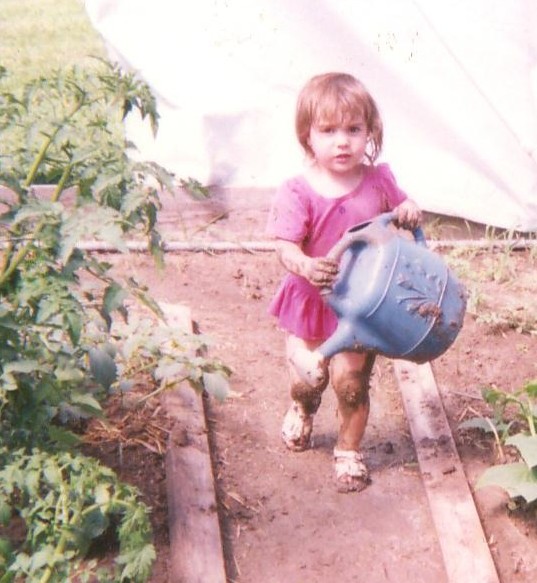
Fast forward to 2004

In 2004, I built my first display garden at the show and Courtney was too young to help us build, but when the show opened, she came and handed out brochures. As I watched her work the crowds she was a natural, answering questions about plants, not intimidated at all by the massive crowds.  I wondered if she were to design a garden for the show, what it would look like.  

2005

A child of the Garden Grows
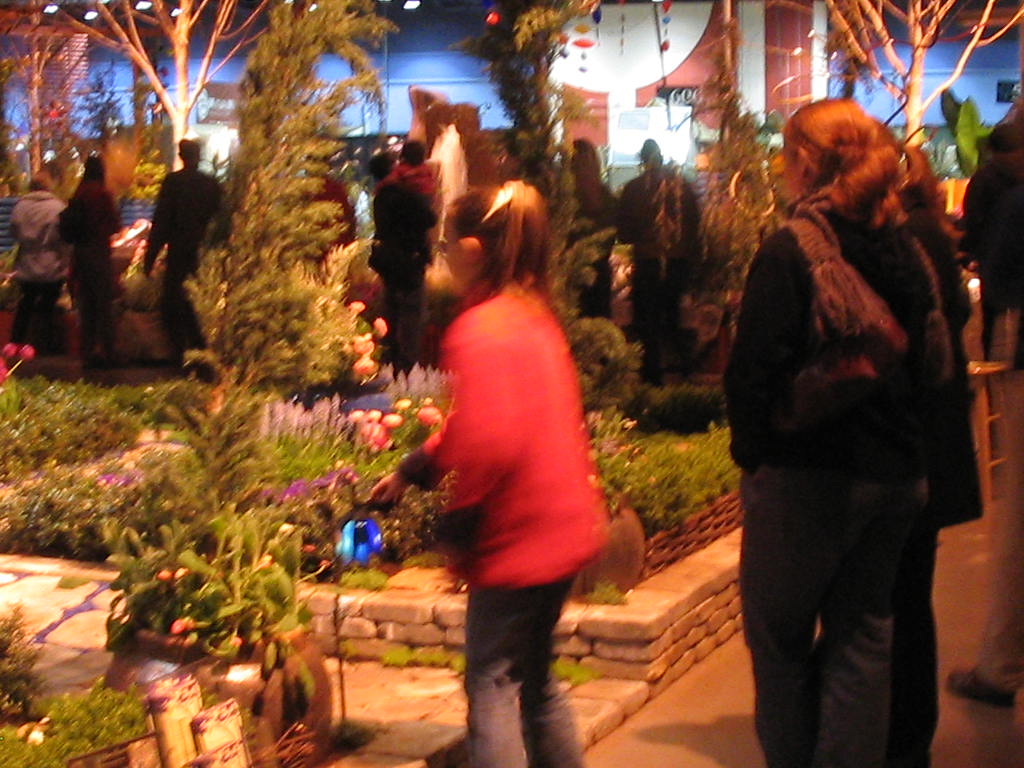
a bit of a blur...Courtney working the crowd in 2005

This was the garden I produced in 2005 based on Courtney’s ideas.   The centerpiece of the garden was a beautiful wood greenhouse made to look like a tree house resting on purple painted Madrona tree branches.  Courtney was once again too young to help us build, but I still remember the look in her eyes when she saw the completed garden for the first time. Magical!  She handed out brochures during the show again and she was an absolute pro. I had a woman pull me aside with a smile and say, “who is that child?” she is spouting off botanical names and telling great information. She was impressed and I was proud.

As time went on, Courtney helped build for the 2007 and 2009 shows. She finally was able to experience the creative hum of how the show really is built.  Show garden building has always been a family affair with my two oldest daughters  and husband pitching in. After the show in 2009, we were having a discussion around the dinner table and it came up that my rotation to do the show next would be her senior year in high school.  That crazy light bulb went off over her head, as we began to chatter about how fun it would be to make it her senior project.

Checking out plants for the 2011 show garden

Follow along as Courtney and I blog about the final countdown to the show in February.


Reading the Garden

I am often asked this time of year; what would be a good garden book for gifting. As my mind wandered to this latest inquiry, my thoughts also strayed to one of those annoying advertising strips that flit across the computer screen.  Electronic books are the hottest thing this Christmas…or at least that is what the advertisement said.

Really?…where the heck am I going to press plant leaves on a Kindle™—I like pages, I like opening a book and the musty smell of old paper. I like when a dried leaf flutters out – a reminder of a day in the garden identifying plants.  I find joy in discovering gardens in my mind by beautiful descriptive words. The floriferous words of Constance Spry in her Garden Notebook; “Perfection in living seems to me to consist not in the spending of large sums of money but in the exercise of a selective and discerning taste in the use of what we may possess, and flowers and plants can in their judicious use contribute in a high degree to the elegance and graciousness of life.”There is also the matter of fact verbiage of Gertrude Jekyll, the humor of Beverley Nichols, the realism and wit of Henry Mitchell in his pursuit of a garden in The Essential Earthman.

 Yes, they take up more space than a stream of electronic pages practically the size of a credit card; but how will I feel surrounded and comforted without bookcases doubled layered and overfilled. I may have to go kicking and screaming in the electronic age but I will cling to the earthy smell of my garden library the whole way.

 On a recent foray to Goodwill, my husband handed me a book that he had dug from the bottom of a bin. The green fabric cover was a bit tattered and there was scribble from a tiny hand learning to explore with an unwarranted marker.  The title… Making things Grow outdoors…catchy?  Not really, but the words on the pages drew me in.  I tend to flip through, read randomly, and then go to the last page of the last chapter to decide if it will come home to my overburdened bookshelves. Here is a quote that made me take this one home “…A tennis victory is forgotten, a golf card torn up and your past triumphs in those fields are remembered mainly by yourself. But a garden ….stands as a monument to what you have put in it as well as your involvement with nature in an era of ever increasing divorce from wild things…” Thalassa Cruso.  If you do not know who the writer is check out a tribute to her in the New York Times.

http://query.nytimes.com/gst/fullpage.html?res=990DE6DF163EF93BA25755C0A961958260

Now how would I have discovered the “Julia Child” of horticulture without a treasure hunt at the bottom of a bin of books?

Read a garden book the real way… turning paper pages and getting crumbs in the center crease from eating cookies while reading.   

But I digress…

Going back to the original subject; gifting books for a gardener. 

Take a journey to your local hometown used bookseller, and haunt the shelves. Dig into anything by Beverley Nichols, Henry Mitchell, Vita Sackville-West, Gertrude Jekyll, Christopher Lloyd, and Rosemary Verey first, and then journey to lesser-known authors.   They may not have the glossy photos of modern garden books, but the words will paint the pictures for you.  As you peruse shelves  take a  moment to  just read the names of books; A Feast of Flowers, the Language of Gardening, Adventurous Gardener, The Complete Book of Garden Magic…you get the pictures without even needing a photograph.

Leafy memories and lazy composting

As I was pumping gas today staring off into the distance, I realized how annoyed I was by a landscape company’s incessant buzzing sound as they were cleaning up the parking lot. I looked towards the noise wondering what they were doing. Methodically, and must I say quite artistically, a man was blowing swirls of yellow and gold leaves into tidy piles along the curb.

Somehow, the annoying hum of the leaf blower faded as I watched the piles of leaves get higher and higher. A childhood memory floated in my mind of our yard in North Carolina. We had a huge back yard filled with tall trees, no garden-just trees, and every fall the ground was a blanket of brown crispy oak and maple leaves. My dad would rake them into huge piles and we would run into them head-first. (What is it about a pile of leaves that make people run into them without a care about what you might hit when you bottom out?)

It really was just simply joyous. Our big black dog would disappear in the piles until all you could see was a furry black nose coming through a burst of leaves. The memory is so strong that I can still remember the earthy smell of fallen leaves. My garden in the Pacific Northwest has tall towering fir trees…a much less deciduous garden where those massive piles of leaves really don’t exist like I remember when I was a child. (Really, everything is bigger when you are a kid)

I look at leaves in a very different sort of way now…mulch and compost…death and decay. A different kind of joy-garden gold.  I do love this lazy composting method by Marianne B. in her latest newspaper column. http://www.thenewstribune.com/2010/11/10/1417648/fallen-leaves-are-great-source.html

Got leaves?

Rake them in a big pile,

jump in with joy,

stand up-creaking joints and aching muscles all the way

brush off random leaves

pull out a garbage bag and fill ‘er up!

Recycle!

This is a post from my former blog that is timely considering it is a chilly day and the tea kettle is whistling!

A blustery day and tea…

It seems a blustery, cold fall day sends us a signal to go inside for a hot cup of tea. One of my favorite ways to use herbs fresh or dried is to blend them with different types of black or Chinese teas.

These types of tea that are typically purchased and are really just the many ways Camellia sinensis (the true tea plant) is harvested, dried and preserved. Purchase them loose and handblend flavorful teas with your own herbs from the garden. Flowers harvested for teas include German chamomile, lavender, calendula, roses. Leaves include lemon verbena, mints, bee balm, sage, rosemary.

How to blend your own teas:

Harvest herbs from the garden and dry them. Store in glass jars. These will be like your own buffet of flavors to add to ordinary teas.

Mix a single herb with purchased tea such as Darjeeling, green or Earl Gray to create flavored blends:

Combinations to try:

Lavender buds with Earl Gray

Mint leaves with green tea

Bee balm leaves and Darjeeling

Rose petals and irish breakfast

Chamomile flowers and white tea.

To use: measure approximately 1 teaspoon of loose herb per cup of hot tea. Adjust to taste