Cynthia Harp and Charity Harp make beautiful music during the 2012 Northwest Flower and Garden showRe-defining Andante wall detail
The details that make up a garden are the pieces that set the scene. Plants are a given, they go in a garden, but how you design elements around them helps finish the story.
I have always had a weakness for ruins in the garden. I think hugging ancient stone during a garden visit to Montacute in England did it for me. Oh the stories that stone could tell. Ancient stone has personality; weathered with lichen, moss, and age. Hard for man to mimic what nature does. That story telling aspect is what sets the design notes for building ruins in the garden; you get to create a sense of a story. During the process of designing this year’s show garden, many hours were spent on how we would build the backdrop for this garden; a ruins wall that would appear as if an old symphony hall had crumbled down or the music room of an ancient castle had been reclaimed after its partial destruction. We calculated how much stone it would take to stack it and were a bit bemused by the tons of weight we were stressing the convention center floor with. At one point in our designing I negotiated with a local artisan to make the wall. Ben Isitt www.bensartworks.com creates realistic works of art carved from specialized foam. His work is magical and beautiful, but alas he was out of our budget range. What I did learn from Ben was that carved foam could be made to look real and painted to withstand the outdoor elements. Very cool! In the end, a decision was made to create the wall as a temporary structure of foam built by one of our team members. Constructed by Joan Bogan, I wonder if she still is vacuuming bits and pieces of fluttering white foam from the nooks and crannies of her workshop.
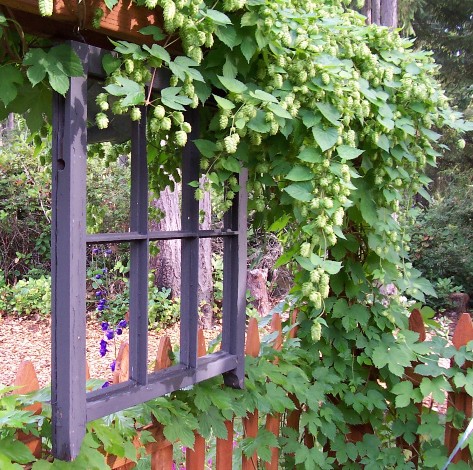
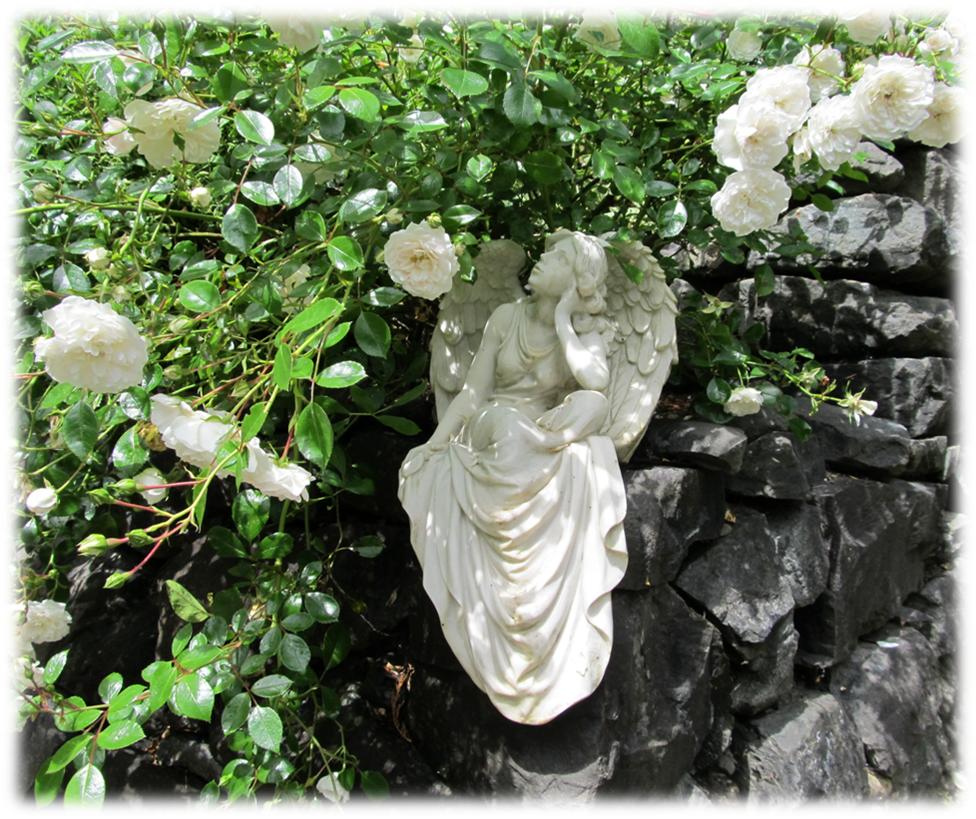
In your own garden, we can’t all have a gothic wall but it is more the remnants of things place thoughtfully that create the story.
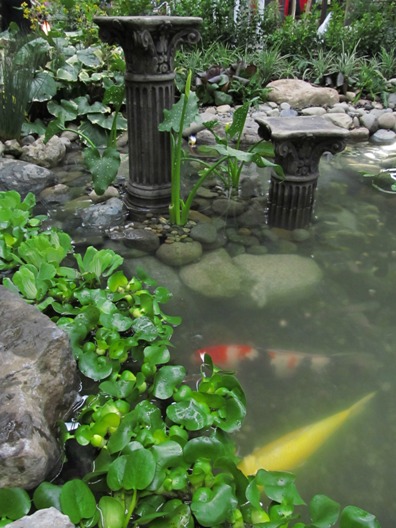
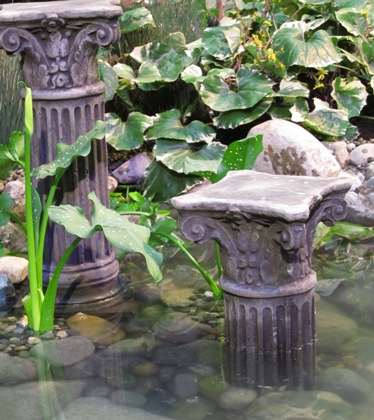
simple yet effective, columns placed in the water feature give a sense that a wall once existed here.a lesson in cheap pottery. It broke after a year in the garden, so it became my little ruins
In the design process of the 2012 Northwest Flower and Garden show display garden, one of the concepts that was immediately given to me was a very natural water feature of tumbling rock, after all, I was working with “Mark the Pond Guy.” The rest of the garden was formal and elegant, piano, harp, baroque patterns- so to meld all the ideas together I felt it was vital that the water feature blended back into the “living” spaces, not just set to the side as a visual. There really needed to be a connection between the bold, dramatic tumble of rock and the elegance of the harp, piano and living areas. The water disappears under the decking to invite interaction. You can dip your toes in the water or lie on the deck and drift your hands for koi kisses.
"floating"stone steps between decks
The stone floating water steps gave passage between the two spaces. It was a way to make the rough, natural rock connect to the man-made decking and the formality of the garden style. Mark also wanted koi in the pond, but it needed to be an up close and personal thing. He didn’t want show visitors to see the fish from a distance, but to actual be able to feed them and reach out and touch them, so we placed a large sitting rock right at the edge of the pond. Throughout the show some of the most joyful moments were to watch the kids (adults too!) climb on the rock and watch the fish. In the back of the pond where the drama was, the water needed to emerge from somewhere. This is where a touch of theater came in, the large ruins wall, as if a symphony hall was crumbling down by the rush of water from somewhere beyond.
It just would not have been the same if the water had just emerged from a grove of trees (that would have been too easy…so my gratefulness for not taking the easy way out goes to the hard working team headed by Joan Bogan www.joansnestingplace.com who stressed and worked so hard to get that ruins wall done! ) Thanks also to Mark Harp and his hard working staff that created the water feature. It is not easy to build such a grand feature in three days on the fourth floor of the convention center in downtown Seattle. Watching Mark individually choose and stack tons of rock (yes it was real and individually dry stacked!) was like watching an artist paint a picture. With the heavy-handed help of Marenako’s and their heavy equipment, I just watched in awe. The pond was beautifully made and finished right up to the last tumble of gravel along the edges.
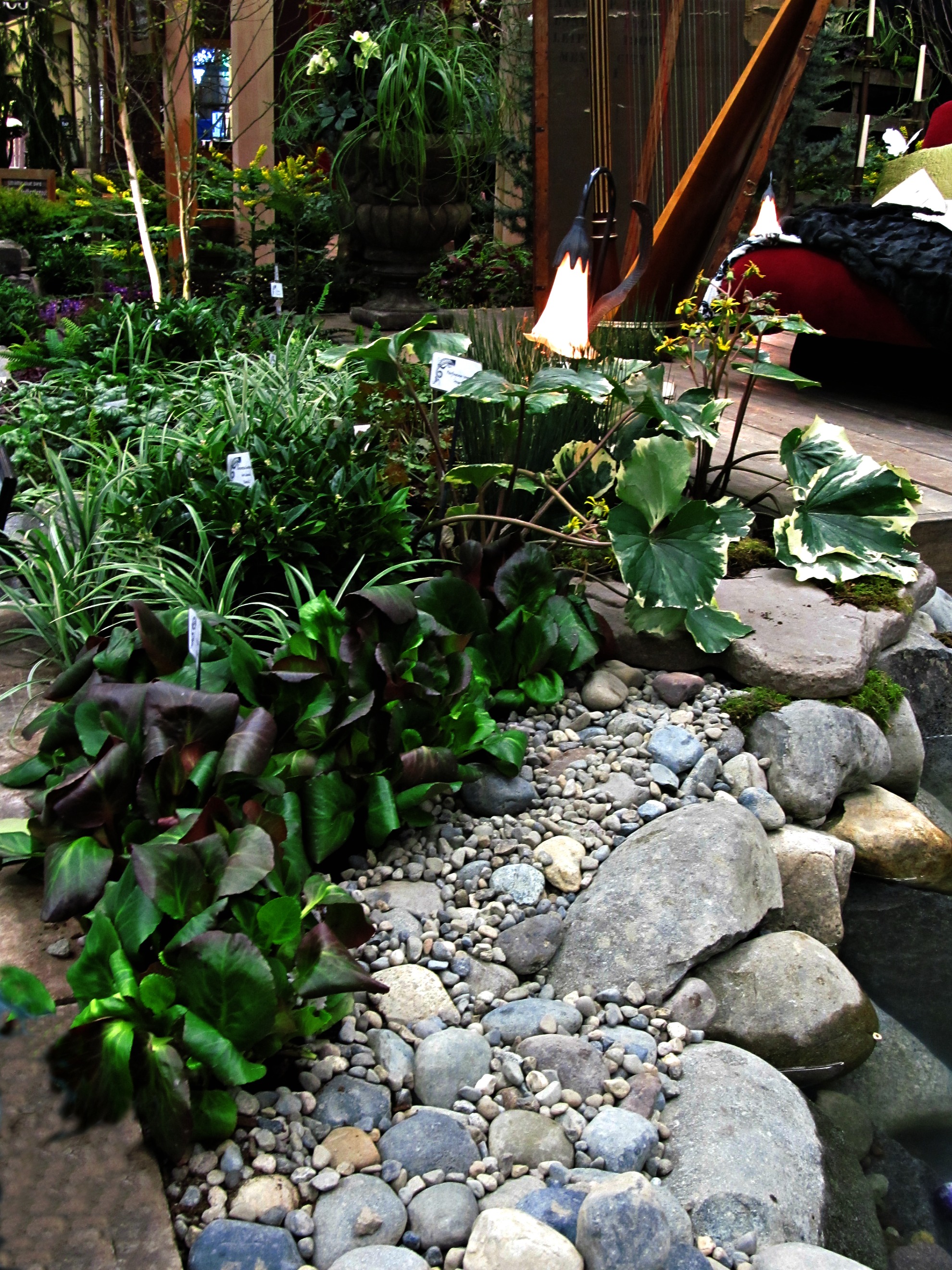
the fine art of finishing a pond edge
In garden design, many clients I work with have a wish list for their garden and a most often listed item is a water feature. The reasons are numerous: the relaxation of the sound, drown out unpleasant noises, the Zen of flowing water, collect rainwater and /or a place for the hobby of keeping fish. The investment of a water feature really should be more about the thoughtful process of integrating it into a lifestyle rather than just the thought that you need a water feature. Decide if you want to just “look” at it or “live” with it. Will it be a scenic view or artistic feature imbedded into the landscape? Water features just for visual need to be positioned correctly to create a scene from the home or an outdoor living space.If the water is just for the relaxing sound, consider where it is best positioned? Placement should be where the sound is pleasant and gently echoed through the garden. Adapt the size and type of water feature to the size of the garden. A common mistake is to have the rushing or bubbling sound of water and finding it just makes you have the urge to go the bathroom more than it relaxes (you really don’t want to know how often I have heard that!) The other side of this planning process is “living” with the feature. Will it have fish and need good accessibility with pathways, bridges, or decking to create a more intimate experience? If the pond is to keep fish then it needs to be a certain size and the environment need to be addressed; such as the inevitable interaction with wildlife (those sneaky raccoons and looming herons.) Another key to a beautiful water feature is how it integrates into the surroundings. Stylize the feature: an elegant and formal garden might include a European style fountain. A natural relaxed garden style is tumble of rock that appears to come from natural area or a contemporary garden design could play with shape and color of water bubbling from glazed pottery. Logistics…logistics…logistics- those details steal the romance out of planning a water feature, but it is a vital part of the success. Need more water feature dreams? Check out the Moonlight Pond tour by Mark Harp from the Pond Store. www.markthepondguy.com
We all know that display gardens at flower shows are a bit of theater in the midst of all that horticultural giddiness. Plant nerds almost hate to admit it (it’s all about the plants right?) but we go to the show to be entertained too. Give me an emotional response, not just a stone patio with primroses and red twig dogwood around it. I loved that I could wander to a boulangerie in Paris (Wight’s Garden) or drift off to the sound of a harp playing (Fancy Frond’s). When the Bluegrass band started playing (Susan Browne Landscaping) it made me smile and crave a tall glass of sweet tea and of course the slow rhythmic drip of water on drums from Sublime Garden Design beat to its own unique style of creativity.
Every time I design a garden for the show, I want to incorporate ideas that you can see in your own garden. I strive to be horticulturally accurate (right plants for the conditions we are mimicking), incorporate garden elements that are usable in the real world (floating water steps, decking that overhangs the water for dipping your feet into) and then I want to give that moment of entertainment. When we heard repeatedly how people would love to sit on the chaise and nap, I knew we had hit the mark.
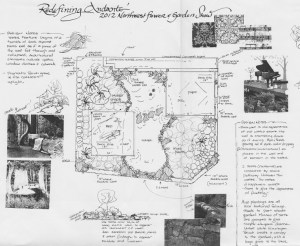
Re-defining Andante
Over the next few days I will share my steals and inspiration from the garden we designed at the 2012 Northwest Flower and garden show…
O. k… for me it is about the plants:
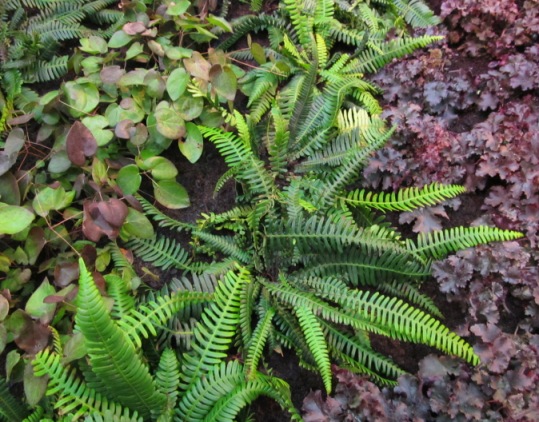
Variegated Farfugium plays along the water's edgeEpimedium, Deer Fern and Heuchera 'Melting Fire'
Create a plant palette. Much like an artist chooses colors that accent, blend, contrast and compliment each other; choose plants that do the same. Start with color. This plant palette played in the shade with burgundy and silver. Dark colored foliage in a shade garden needs contrast; silver and white variegated plants do the trick. The shape and habit of plants is also vital. The spiky foliage of ‘Silver Dragon’ Liriope against the ruffled deep colored foliage of ‘Crimson Curls’ Heuchera, flattered with the dissected fronds of Deer fern (Blechnum spicant) all bring out a tapestry on the ground. You don’t want plants to blur together in boredom; you want to play off the assets of each.
Bergenia 'Baby Doll'. Liriope 'Silver Dragon', Heuchera 'Green Spice' tucked with scotch moss along rockery edge
The heart-shaped foliage of Epimedium is perfect to weave around the ankles of Sweet box (Sarcococca ruscifolia) and the understory of trees to create an airy evergreen groundcover. Bergenia ‘Baby Doll’ in groupings made you look at this common plant in a whole new way. Plant this like a drifting puddle along the edges of pathways or rockery.
Then there was the darling (and a bit diva-like too) the Farfugium japoncium ‘Argenteum’. This bold foliage was an eye catcher along the edges of the pond, juxtaposed with the linear blades of ‘Elk’s Blue’ rush (Juncus patens). The leaves were bold enough to compete with the massive rock that made up the falls of the water feature. Placing plants next to large rock is not for the faint of foliage. Landscape rockery becomes more natural when plants are tucked around them; just remember to do it like you mean it. Give the rock some competition with bold foliage and color against it.
Pinch for tomorrow:
Water features are a lifestyle choice
It is so very close to flower show time. The Pacific Northwest is buzzing as the calendar flips to February. The buzz in my head started many months ago. I received a phone call from Mark the Pond Guy (www.markthepondguy.com) and he said he was involved in putting together one of the big display gardens this year. Would I like to hear more? Hmmm, out of curiosity, I said sure I’ll come to a meeting. I usually skip a year between garden shows to catch my breath from the monumental task of building one of the gardens. So I sat in a planning meeting with Mark,his wife Cindy and friend, Joan Bogan. Their enthusiasm was infectious. I do love designing these gardens. So, I was caught up in a whirlwind of music notes, plants, stone, rocks, koi, water and a grand piano. Quite a combination don’t you think? So we converge on the convention center to build this whirlwind of ideas. Mark describes the feeling this week of preparation like a kid anticipating Christmas day. Me too! Along the way I have learned a few things as well. Like what andante is, how wonderful the sound of a piano is when played by someone so passionate about music, how rock can weigh tons or weigh nothing, how hard it is to have mileage and very busy schedules between team members. Yet there is this thing called passion that we all have, and it is to share a garden that you could envision yourself in. We are re-defining andante.
Redefining Andante’ ( ăn-dăn-‘tē)
Andante allows passage through music that changes the tempo. The listener can catch their breath.
How does andante feel in a garden?
The hectic race and crescendo of life is far beyond this space. Welcome to a small, tranquil garden that invites you to slow the pace and be inspired to compose and create. The sound and movement of water spills from a tumble of building ruins that weaves through a garden in harmony with foliage and color that relaxes and soothes. Original music inspired by this garden, written by one of the creators, will be performed throughout the show.
Put that visual in your head and then come to the show to see it full-scale. Grand piano and all…
I don’t make New Year’s resolutions. I really tend to think about how I can better something… in manageable chunks. Not a one liner that sets me up for discouragement.
For all gardeners, hope springs eternal and thinking about what we want to do in the garden feeds that hope that continually filters through the seasons to come. As we begin the new year, think more new inspirations rather than resolutions. Inspire to learn, do and create something new in the garden. Odds are it will be much more rewarding than dieting!
Take a Class: In the garden, learning never stops. Take a class on a garden subject that you have always wanted to learn. Resources are bountiful in the pacific northwest. Join me for some upcoming seminars at the Tacoma Home and Garden Show the last week in January, (www.otshows.com)January 26th, 2012 at noon: Landscaping with Herbs, Many herbs are overlooked for their texture and beauty that create fragrant hedges, mixed borders, container gardens and more. All sizes and styles of gardens come into play. Just imagine a French Provençal style garden with the purple haze of lavender or a Mediterranean garden with fragrant rosemary. Herb varieties can bring classic style and take the center stage in many designs. January 27th, 2012 at noon: Garden Design DIY, A beginners guide and creative approach to designing a garden. Practical tips to get the process going successfully. Don’t just create a landscape; plant a garden with texture, dimension and longevity. Make it yours. Easy ideas to incorporate the practical aspects to create the garden you have always dreamed of. Shortcuts to designing by using photographs and many more insider tips. January 28th at 3 pm: Garden Borders from Dull to Drama, How-to tips and ideas for editing existing mixed garden borders; easy ways to re-invent without having to completely re-do. Learn tricks of the trade and create fabulous mixed borders. Peel back the layers of plantings; discover what is missing and where to add puddles and pockets of color and texture and drama! Photos inspirations and step-by-step instruction to become your own designer.
Go Organic: Learn to tolerate a few weeds and nibbled leaves. Be good to the environment and use organic means of controlling pests and problems. Start with natural lawn care. It can be the biggest water hog and chemical demanding part of the garden. Learn how and practice management of an environmentally friendly yard. The experts are at Seattle Tilth! (www.seattletilth.org)
Take a Garden Tour: Visit gardens like Lakewold (www.lakewoldgardens.org ) or the Chase Garden (www.chasegarden.org) for inspiration of classic designs. Join the Northwest Perennial Alliance (www.northwestperennialalliance.org) and receive their open gardens book. This is an opportunity when local gardeners open their private spaces. Take notes and pictures, it is one of the best learning opportunities to see what grows well in this area and enjoy the peak season of gardens.
Plant Vegetables: Imagine tomatoes fresh off the vine and leaf lettuces from the garden. This season, find a sunny spot and plant some vegetables to enjoy what the garden can give back to you. Hit the seed racks this spring for lots of variety. Here is a short list of some of my favorite “go-to” suppliers Ed Hume Seeds (www.humeseeds.com) , Renee’s Garden (www.reneesgarden.com) and Territorial Seeds (www.territorialseed.com)
Plant Natives: In garden designing, I see more and more homeowners looking to eliminate native areas…such a shame. Many natives are desirable plants that are beautiful in landscape design, either as a backdrop to more “cultured” plantings, mingled in mixed beds and borders or creating a “finished edge” to the beginning of natural woodlands. Take time to learn more about natives and plant them. Local nursery with lots of info: Woodbrook Nursery (www.woodbrooknativeplantnursery.com)
Keep a garden calendar or journal: It can be as simple as an ordinary calendar. Write down something every day about the garden, it can be regarding the weather, a new bird sighting, the day something bloomed and any tasks done. It will be a valuable tool for seasons to come. Indulge in a new journal with the beautiful artistry of Jill Bliss (www.jillbliss.com)
Compost: Compost, Compost…every garden should have a compost bin! Basic compost info from Creative Gardener FYI makeyourowncompost
Mulch more, Weed less: Put your garden on a good organic mulch diet, the reward will be healthy garden soil. Mulch at least 3 to 4 inches to control weeds too. More from Creative Gardener FYI in defense of weeds2
Teach a child the Wonders of Gardening: whether your own, a grandchild, or volunteering at school, there is real joy in working with children in the garden. Seeing the simple act of planting through a child’s eyes will renew your viewpoint as well.
Visit the garden show: The perfect way to spend a February day is the Northwest Flower and Garden show in Seattle.(www.gardenshow.com). Nurseries have tickets on sale now…steal ideas from the gardens, shop the amazing booths and make your garden beautiful. Plan your weekend at the show and come and visit me Saturday February 11th on the DIY stage for one of my favorite subjects: Herbs!! The top multi-purpose herbs to grow in your garden this year.
Think Design: “The plain hard work that goes into an unplanned and non-descript garden might just as well go into a planned one.” (Summer 1953, George Avery Jr. the Brooklyn Botanic Garden). The garden design studio is moving to Tacoma! Join me for design sessions in my new space starting in February. Bring your photos and ideas and we will create! The new space will also include vintage garden books for sale from my amassed collection, herbs and favorite perennials, plus garden findings. It’s “All About the Garden”. Stay tuned for more information.
For the sweet tooth on your list, create a mini selection of herb-infused sugars.
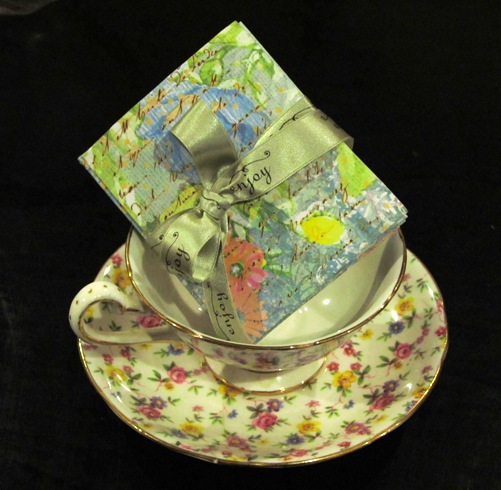
Wrap up in a gift box and include a recipe book or cards sharing how to use them!
Use peppermint or spearmint leaves, rose-scented geranium (Pelargonium), lavender buds, rose petals, lemon verbena leaves, vanilla beans or ginger. All the following recipes become more flavorful as the fragrance infuses into the sugar. Use decorative glass jars that seal tight.
Herb leaf or flower petal sugar
Alternate a layer of sugar and the chosen herb until the jar is full. Allow to sit a few days before use to allow the flavor to infuse through the sugar.
Vanilla Sugar
3 cups sugar and 2 vanilla beans
Directions: Place sugar in a bowl. Using a sharp knife, cut vanilla beans in half, lengthwise. Scrape seeds from the pod into the sugar. Mix vanilla seeds and sugar to evenly distribute the seeds throughout the sugar. Strain sugar mixture through a fine mesh or cheesecloth into an airtight container. Halve vanilla pods crosswise, and submerge them in sugar.
Lemon Sugar
3 or 4 small lemons and 2 cups sugar
Directions: Use the zest (the skin) from the lemons. Scrape as much of the white, bitter pith off as possible. Add zest to a food processor and grind with 1 cup of sugar until thoroughly mixed.
Transfer the mix to a medium bowl. Add remaining cup sugar, and toss until evenly mixed. Allow to dry before placing in a glass jar, by spreading the sugar mix on a cookie sheet at room temperature for about an hour or until dry.
Ginger Sugar
In a food processor, whirl together one cup of sugar with a few chunks of candied/crystallized ginger.
Ideas for use:
-Rim the glass of a cocktail with lemon-infused sugar by running a fresh-cut lemon slice around the rim and dipping it in the sugar mix.
-Rose geranium sugar and other herbal sugars are perfect to sweeten tea or to sprinkle on the top of shortbread or scones.
-Use peppermint infused sugar in coffee, tea or hot toddy’s
-Sprinkle vanilla and ginger infused sugar on warm gingersnaps, fresh from the oven (see my favorite gingersnap recipe)
Gift Package with a tea cup, shortbread cookies, a jar of honey, and a personal sentiment, plus inspirations that slow the pace and relax with a cup of tea, like a good book.
Create unique blends to give
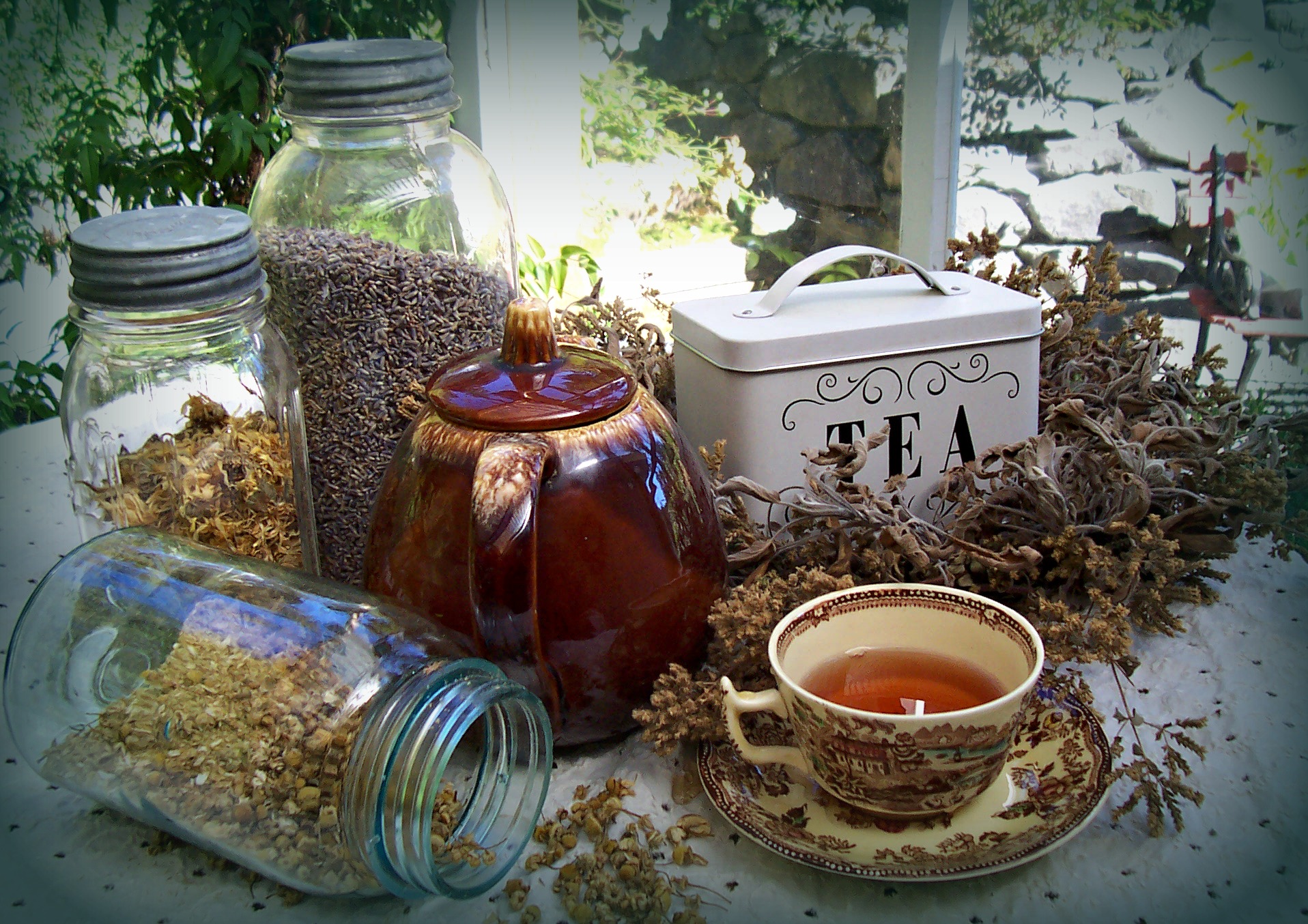
Herbal Tea Recipe Blends:
Experiment with flavors you like, try not to add more than three ingredients at a time.
Sweet, Minty and Soothing
1 cup dried lavender buds
1 cup dried spearmint
½ cup dried German chamomile blossoms
A Tangy Touch Of Citrus
1 cup dried pineapple sage
1 cup rosehips, lightly crushed
½ cup dried lemon balm
A Floral Blend
½ cup rose petals
½ cup lavender buds
1 cup lemon verbena
Herbs Mixed With Indian or China Teas:
Create flavorful blends from purchased bulk teas. Mix a single herb with bulk tea such as Darjeeling, green or Earl Gray to create unique blends. The homegrown herb will enhance the tea with flavor and fragrance. Begin by mixing the tea 4 parts to 1 part of dried herb.
Combinations to try:
English lavender buds with Earl Gray
Spearmint with green tea
Bee balm with Darjeeling
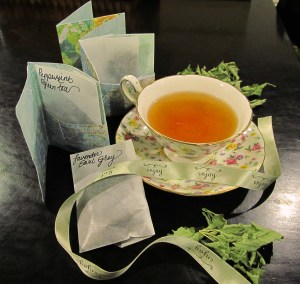
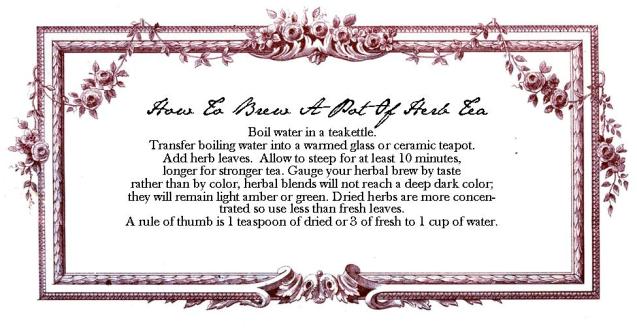
Package hand-blended loose teas in small glassine bags.Seal and label with the flavor and instructions on how to brew.To use: 1 teaspoon of loose herbs per cup of hot water.
The last stretch before Christmas–do we mob the mall for those last minute things or pay overnight shipping OR do we get creative. I love homemade gifts.
As we head into the final days before Christmas, I will be posting projects that can be made in about an hour (once you gather all the materials!) Give joy in a thoughtful way!
One of my favorite food discoveries this past year was Quinoa. I season it with fresh herbs (love what cilantro or basil do to quinoa’s nutty flavor!) , drizzled with garlic infused olive oil, fresh grape tomatoes and sliced black olives. I make a big batch, toss in the herbs, refrigerate it and have it as a quick lunch or dinner. Quinoa (pronounced KEEN-WAH) is a plant (Chenopodium quinoa) native to the Andes Mountains. It is popular for its high protein and nutrient value. To learn all you really want to know about this plant go to http://www.hort.purdue.edu/newcrop/afcm/quinoa.html
Cook quinoa like you cook rice.
Basic Quinoa Recipe
2 cups water 1 cup quinoa
Place quinoa and water in a 1-½ quart saucepan and bring to a boil. Reduce to a simmer, cover and cook until all the water is absorbed (about 15 minutes). You will know that the quinoa is done when all the grains have turned transparent, and the germ has separated. Quinoa is really easy to do in a rice cooker. Follow directions for the rice cooker using the same information as rice. Makes 3 cups.
Bottom jar: quinoa, middle jar:pecans and a layer of dried cherries, top jar: brown sugar cinnamon topping
Inspired by the book Mary Jane’s Outpost by Mary Jane Butters.(ISBN 978-0-307-34580-6), I found the idea for topping quinoa just like a morning bowl of oatmeal. Tried it, love it, thinking this could be packaged up for gifting.
Christmas Quinoa Give a gift basket with a mini rice cooker and this quinoa collage of jars with the directions for a college student to take home or stack the tower of jars with the directions in a gift bag for a favorite foodie.
Package in small wide mouth canning jars or other decorative jars that stack well:
1st jar- 1 cup Quinoa
2nd jar- a layer of pecans and a layer of dried cherries (or try dried cranberries or blueberries)
3rd jar: 1/2 cup brown sugar and 2 teaspoons cinnamon powder (mix well)
Give the cooking and serving directions: Cook the quinoa according to the basic directions.
While steaming hot serve, topped with pecans and dried fruits then sprinkle with the brown/cinnamon sugar mix (to taste) .
Fresh cut greens brought in the home this time of year is a tradition dating back hundreds of years. It identifies with our need to bring the garden indoors when we are spending less time outside. Traditional winter festivals included “hanging of the greens” or “bringing in the greens” when fresh-cut greenery and branches were brought in to celebrate the harvest and the winter solstice. Not only for decoration, the plants were also used extensively for their heady, healing aromas. The heavy resinous oils in the needles and branches would freshen and purify enclosed living spaces. In ancient Egypt, aromatic spices and plant resins were items of great value for indoor fragrance and the extensive use of scent by Cleopatra is legendary. Ancient Romans made perfuming a ritual for everything from clothing to the sails of their ships, leaving much legend and lore through history, as to their uses.
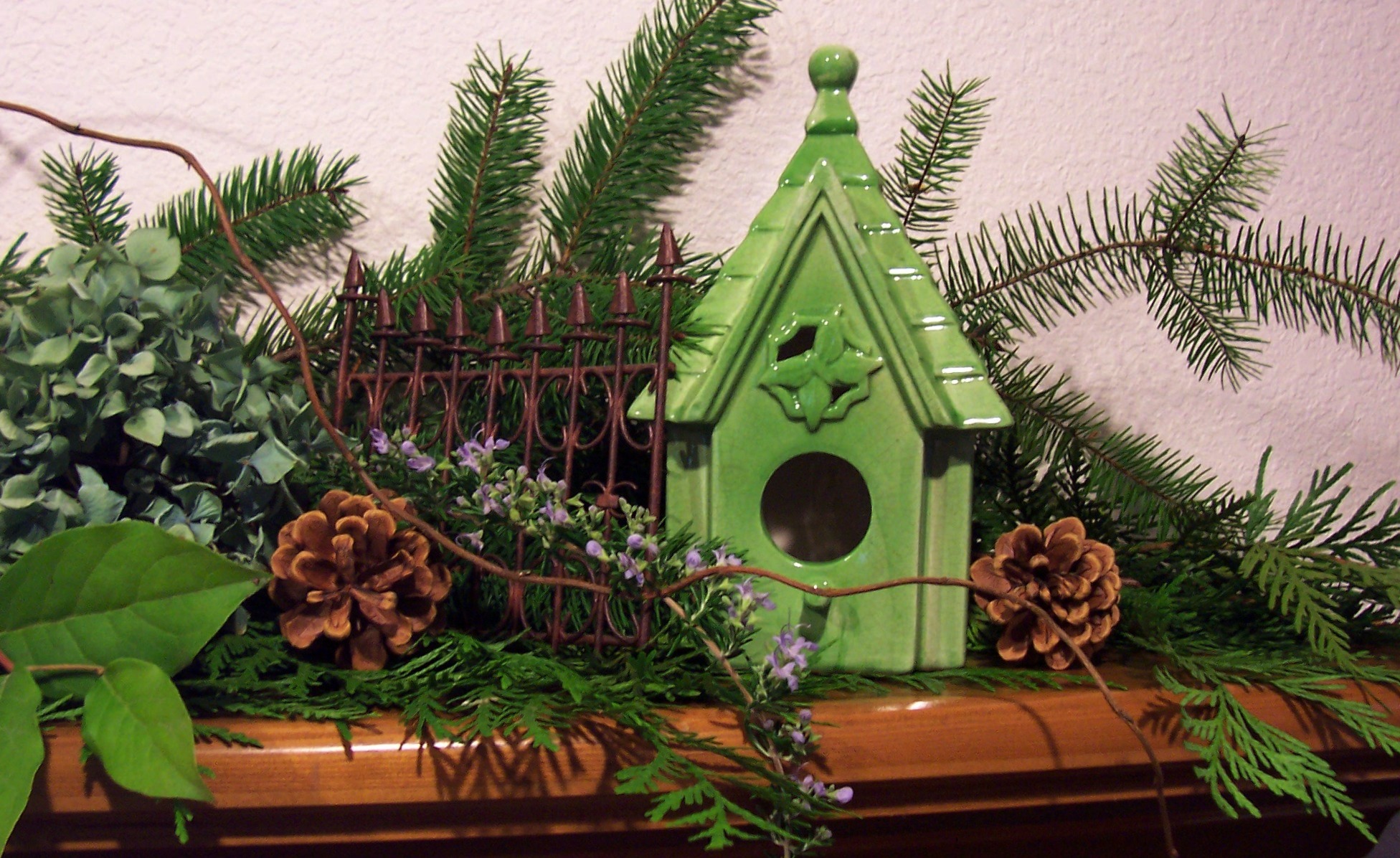
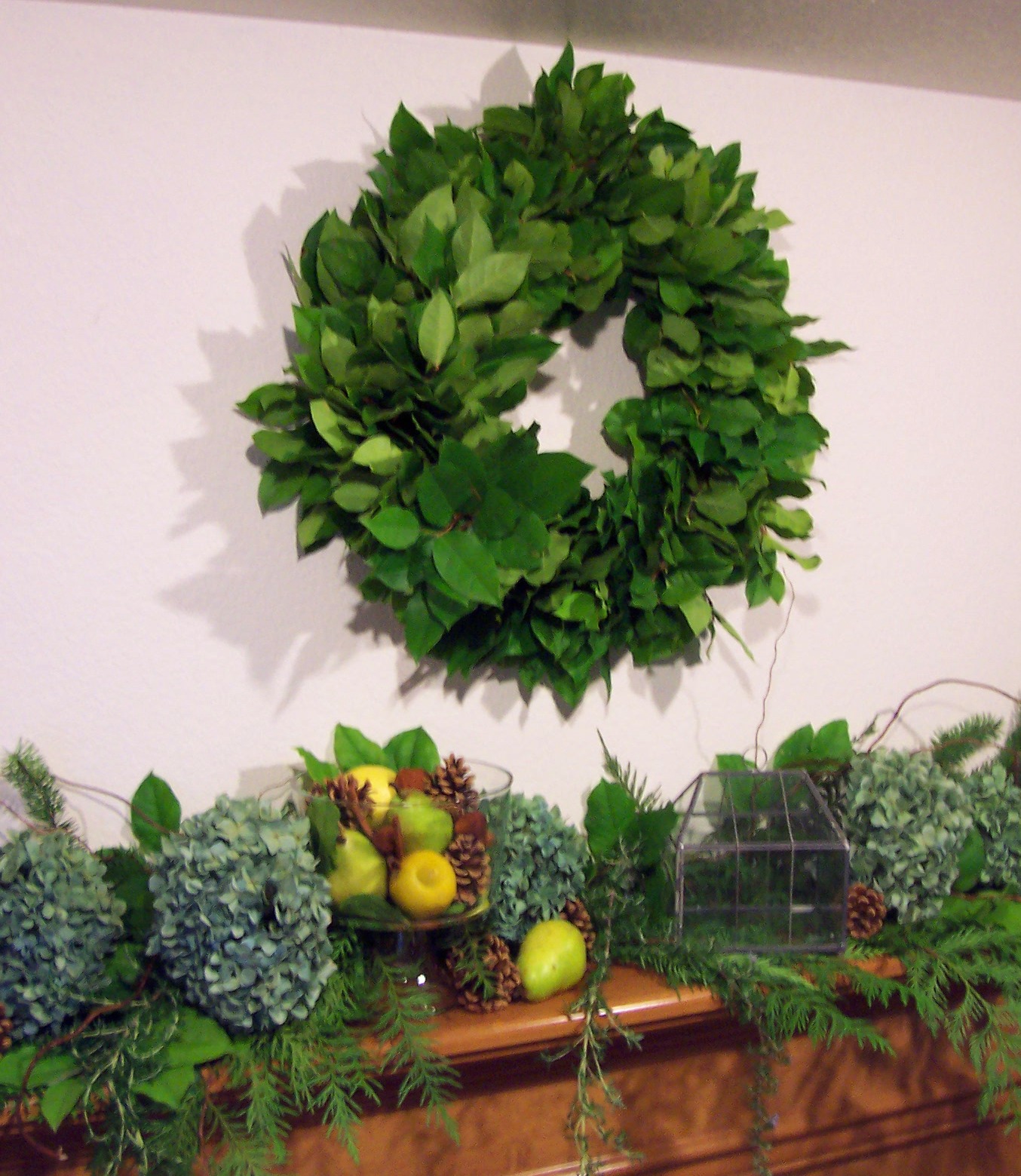
Create your own seasonal traditions by bringing the bounty of evergreens and other natural materials inside. Take a walk through the winter garden and look for interesting seed heads, foliage and branches jeweled with berries. Search for materials with unblemished leaves, sturdy stems and heads that do not shatter when harvested. Move beyond the traditional greenery of indoor decor and look for materials that incorporate a whole range of natural textures. This different way of looking through the garden can inspire and capture fragrance and colors for wreaths, garlands and arrangements, perfect for adorning the entry hall, fireplace mantles and the dining room. Enhance garden crafting with out of the garden details such as dried fruits, fragrant cinnamon sticks, pinecones and spices. Follow these tips and ideas to bring it all together.
Take a bucket with clean water to immediately place, fresh cuttings in
salal, pieris, variegated holly, hop vine, douglas fir
Use sharp, clean pruners or scissors to take clippings
Remove the lower leaves off stems, so they do not sit underwater
Woody stems should be crushed on the ends, so they can take up water easier.
Place buckets of greenery in a cool place such as the garage and allow them to sit overnight to absorb the maximum amount of water.
When arranging fresh stems and branches in a vase, re-cut the end of the stem to allow better water uptake. Flowers and greens that can absorb water and stay plumped up will have a longer vase life. Replace water every few day for cleanliness and keep water at the level it needs to be and top off as necessary.
Most woody, evergreen branches like cedar and salal will last through a holiday season without water.
Pruning Tips
Don’t cut shrubs or trees in a way that may alter their natural growing habit. For example, avoid short cuts at the top of woody ornamental plants. Find selective long branches that allow cuts closer to the base or around the outer edges of the plants. Look for branches that need to be pruned off. Learn what plants bloom on new growth (like Beautyberry); they can usually be cut heavier. As a rule of thumb, never cut more than one-third of leafy evergreen plants. Conifers and needled branches are cut very selectively. Avoid cutting where it will permanently re-shape the tree or shrub (unless you are making a topiary!). Look for undamaged branches that have fallen in the wind or cut small branches where you will naturally want to thin or limb up.
Think lush and full, don’t skimp. Look for textures that contrast and set off each other. If you don’t make your own, use pre-made wreath bases and garland to add fresh berry branches and interesting stems. Alternate color and texture to complete the look.
Inside:
Use caution on wood or fabric surfaces. Fresh branches, berries and moisture can stain. Make fresh decor for parties and special events. For arrangements used for longer periods of time, keep greenery fresh by avoiding drying heat sources. Remove fading materials and replace as needed to avoid shedding and fire hazard.
Outside:
Decorate outdoor window boxes and containers, no need for them to remain bare over the winter. Begin by planting spring-flowering bulbs deep in containers. Top the container as if arranging a vase of cut flowers. Arrange fresh-cut holly branches, contorted filbert stems and fir branches in the top-level of soil of the container. Add weatherproof glass bulbs and pine cones for a decorative touch. As the soil warms in the spring, remove the branches as the bulbs emerge for fresh pops of spring.
Thankful…we hear that a lot this time of year. I think the spirit of thankfulness we feel now, should happen every other day of the year. Don’t get me wrong, I am grateful for a day set aside to reflect on it all, but feel a bit swirled under by all the black Friday stuff. Thursday is just a speed bump to Friday. How did this happen? I remember as a kid when every store was closed and it was truly a holiday where time was spent with family (a bit Norman Rockwell-esque). Forgot the whipped cream? Too bad because the Winn Dixie was buttoned up tight and there wasn’t a store open…anywhere! I recently asked a cashier at a grocery store if she had plans for the holiday and she said she had to work. I told her what a bummer to have to work on a holiday and she brightened up and said she volunteered so she could have the time-and-a-half pay. Somehow, it still made me sad.
So if Thursday is just another day on the calendar that happens to be a big day for turkey farmers, then grateful should be a part of every day. Find a quiet time in each day to reflect, even for just a few minutes. There are many mornings when I am simply grateful that I can put my cold toes over a warm heater vent. Lord, I am grateful for: a warm house, a summer morning in the garden with the discovery of a bloom that wasn’t there yesterday. The range of brilliant colors of fall leaves. The first daffodil to brighten the grey skies in the spring, a phone call from a far-away friend, the giggle of a four-year old, all my girls home at the same time. The list could go on and on, but the message is to be grateful for the simple things and seek thanksgiving in every day.


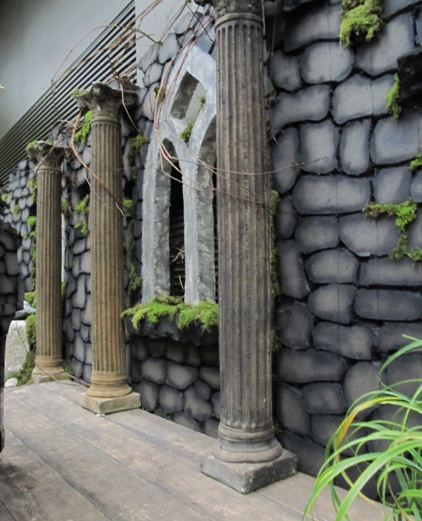
 Oh the stories that stone could tell. Ancient stone has personality; weathered with lichen, moss, and age. Hard for man to mimic what nature does. That story telling aspect is what sets the design notes for building ruins in the garden; you get to create a sense of a story.
 During the process of designing this year’s show garden, many hours were spent on how we would build the backdrop for this garden; a ruins wall that would appear as if an old symphony hall had crumbled down or the music room of an ancient castle had been reclaimed after its partial destruction. We calculated how much stone it would take to stack it and were a bit bemused by the tons of weight we were stressing the convention center floor with. At one point in our designing I negotiated with a local artisan to make the wall. Ben Isitt www.bensartworks.com creates realistic works of art carved from specialized foam. His work is magical and beautiful, but alas he was out of our budget range. What I did learn from Ben was that carved foam could be made to look real and painted to withstand the outdoor elements. Very cool! In the end, a decision was made to create the wall as a temporary structure of foam built by one of our team members. Constructed by Joan Bogan, I wonder if she still is vacuuming bits and pieces of fluttering white foam from the nooks and crannies of her workshop.
















 Creative Gardener